Confusion Corner: Corbières, Cabardès, Cabrières

The corner of France known as the Languedoc currently contains no less than 21 appellations (protected designations of origin for wine/AOCs). A few of these AOCs also include a long list of sub-appellations, including the Languedoc AOC, home to 11 sub-appellations (better known as “geographic designations” and often referred to as “crus”).

That’s already confusing for a wine lover. It gets even more mind-boggling when we consider that three of them are named as follows: Corbières, Cabardès, and Cabrières. Read those again: Corbières, Cabardès, and Cabrières. Although they may sound alike (at least to my ear), they are indeed three different regions, and while I have them grouped firmly together in the part of my brain I call confusion corner, they all deserve a flashcard (or two) all on their own. Let’s see what those flashcards might say:

Corbières: The Corbières AOC—one of the biggest and best-known appellations of the Languedoc—is a large, somewhat-squared shaped region stretching nearly 37 miles/59 km across, from the coastal plain just south of the town of Narbonne into the foothills of the Pyrenees. The eastern/coastal area tends the be the warmest section, made so by the moderating influences of the Mediterranean Sea and two large lagoons—the Étang de Bages and the Étang de L’Ayrolle. The hillier areas—along the area’s southern and western edges—are cooler due to altitude and benefit from the diurnal temperature variations often enjoyed on hillside vineyards.

The Corbières AOC is home to over 2,000 commercial vineyards, covering as much as 33,000 acres/13,500 ha. Red wine is the superstar here; about 85% of the total production is red wine; the remainder consists of rosé (about 12% of the total) and white (3% of the total).
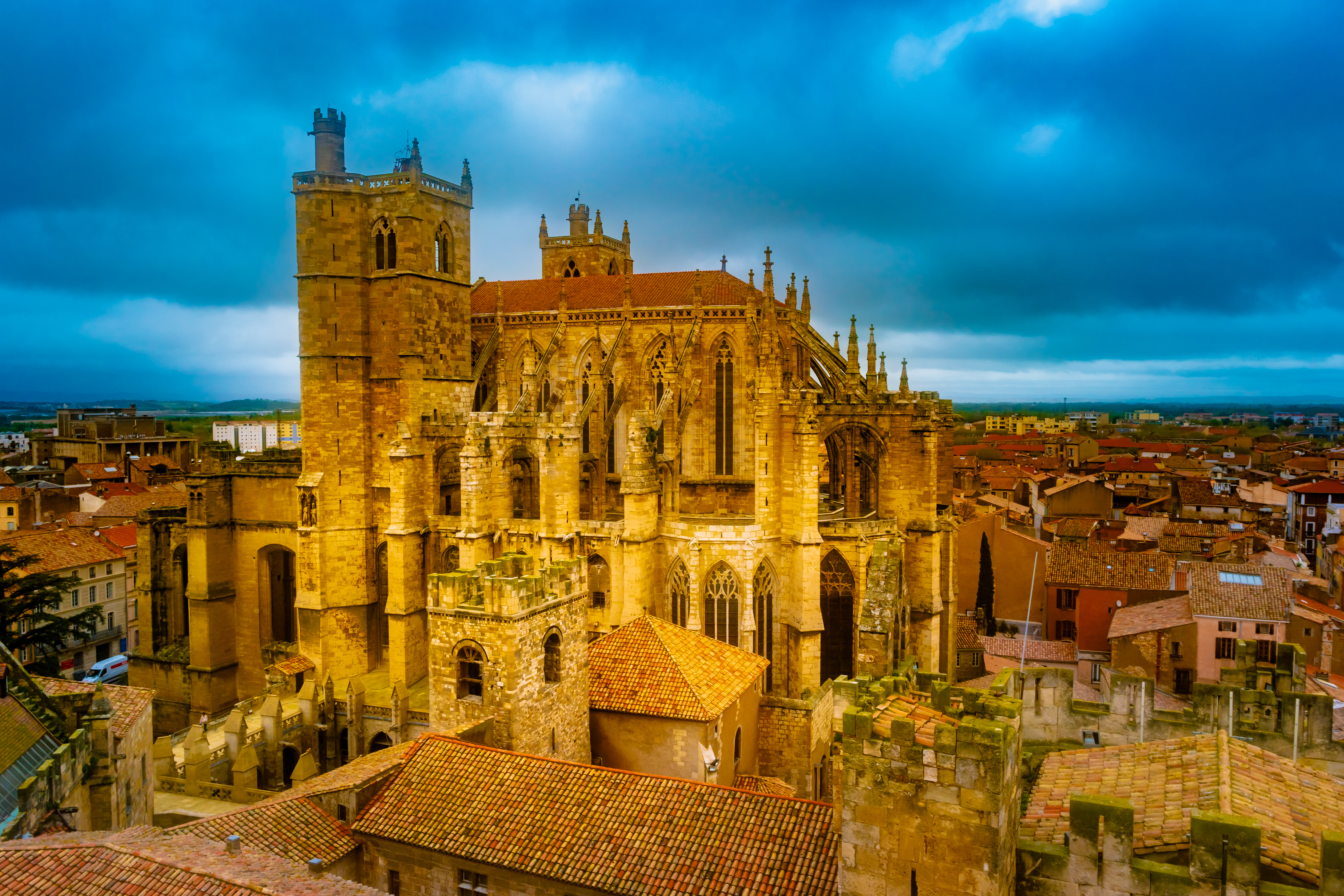
Cityscape of Narbonne

Red wines produced in the Corbières AOC are produced using the (somewhat) typical red grapes of the Languedoc, being based around Grenache, Mourvèdre, Syrah, Lladoner Pelut, and Carignan. Rosé is produced using the same base blend of grapes, but more often contains a bit of the accessory varieties (Piquepoul Noir, Grenache Gris, Terret Noir, and Cinsault) as well as a maximum 10% of the region’s white grapes. Both red wines and rosé must contain at least two grape varieties in the blend.

A long list of white grapes is allowed for use in the somewhat rare white wines of the Corbières AOC; these include Bourboulenc, Grenache Blanc, Marsanne, Macabeo, Roussanne, and Vermentino (among others).

Cabardès: The small-production Cabardès AOC is located just to the north of historic walled city of Carcassonne, just a few miles/kilometers to the northwest of Corbières.  Cabardès—situated to the north of the Aude River—is tucked into the foothills of the eastern edge of the Massif Central in a small mountain range known as the Montagne Noire (Black Mountains).

Carcassonne

The location of the Cabardès AOC places it somewhat at the crossroads of the Languedoc (to the east) and Southwestern France (to the west). These dueling influences are seen in the list of approved grapes available for use in the region’s wines. The wines—only red and rosé may be produced—required a minimum 40% (combined) Grenache and Syrah (typical Mediterranean varieties) as well as a minimum of 40% (combined) Cabernet Sauvignon, Cabernet Franc, and/or Merlot (typical Atlantic or Bordeaux varieties).

Cabrières: Cabrières is one of the eleven subregions of the Languedoc AOC; as such, wines from the region may be labeled as “Languedoc–Cabrières AOC.” The appellation coincides with the commune of the same name, located along Hérault River (in the Hérault Department) about 50 miles/90 km northeast from Carcassonne. This area is located about 20 miles/32 km inland from the Mediterranean Sea and the Étang de Thau (Thau Lagoon). The village of Cabrières is located in a hilly area on the southwestern edge of the Massif Central within a small mountain range known as the Montagne Noire (Black Mountains); many of the prime vineyards are planted to south- or southeast-facing slopes.

Vineyards surrounding Carcassonne

The Languedoc–Cabrières AOC is approved for red and rosé wines only. Both styles of wine are made from the “typical” red grapes of the Languedoc, and must contain a minimum of two grape varieties, with no one grape comprising more than 65% of the blend. Red wines must contain a minimum 50% of Grenache and/or Syrah with the remainder comprised of Mourvèdre, Cinsault, and/or Carignan. Rosé is a bit more complicated, requiring a minimum of 30% Cinsault, a minimum of 20% Grenache, and a maximum Mourvèdre and/or Syrah. A long list of accessory varieties (including some white grapes, capped at 10%) is also allowed for the rosé.

Note: Rumor has it that the wine makers of Cabrières are in the process of applying to become a separate appellation (AOC). This should come as no surprise as former sub-appellations of the Languedoc AOC have been declared separate appellations several times in the past decade. Examples include Pic-Saint-Loup, La Clape, and Terrasses du Larzac. We shall see what the future holds for Cabrières!

References/for more information:

The Bubbly Professor is “Miss Jane” Nickles of Austin, Texas… missjane@prodigy.net
(More) Travel Daydreams: The Wines of Mallorca

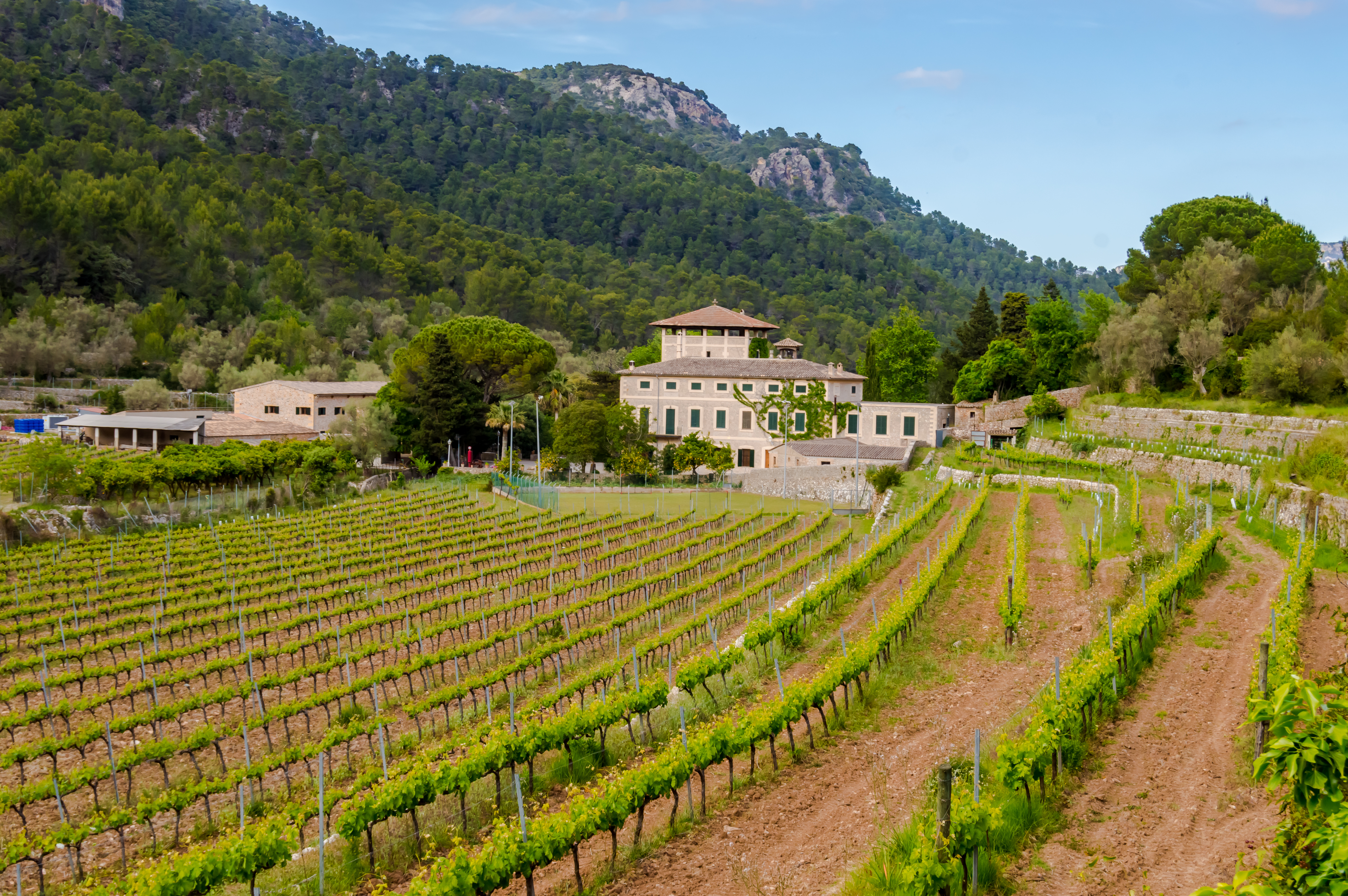
Vineyards in the Binnisallem DO

Lately, I have been indulging in a bit of travel daydreaming focused on the beautiful Spanish island of Mallorca. Last week, we published an article about the (distilled) spirits of the island. This week, I’d like to rhapsodize a bit about the island’s wines, despite the fact that they are not widely seen outside of Europe—remember, this is a travel daydream after all.

Mallorca is home to two PDO (protected designation of origin) wine regions, and two designated as VdlT (vino de la tierra/PGI/protected geographical indication). The island produces red, white, rosé, and sparkling wines from a range of grape varieties, including many that are indigenous to the Balearic Islands as well as some better-known Spanish and international varieties.

As the character of a wine truly begins with the land in which the grapes are grown, let’s start with the island’s terroir.

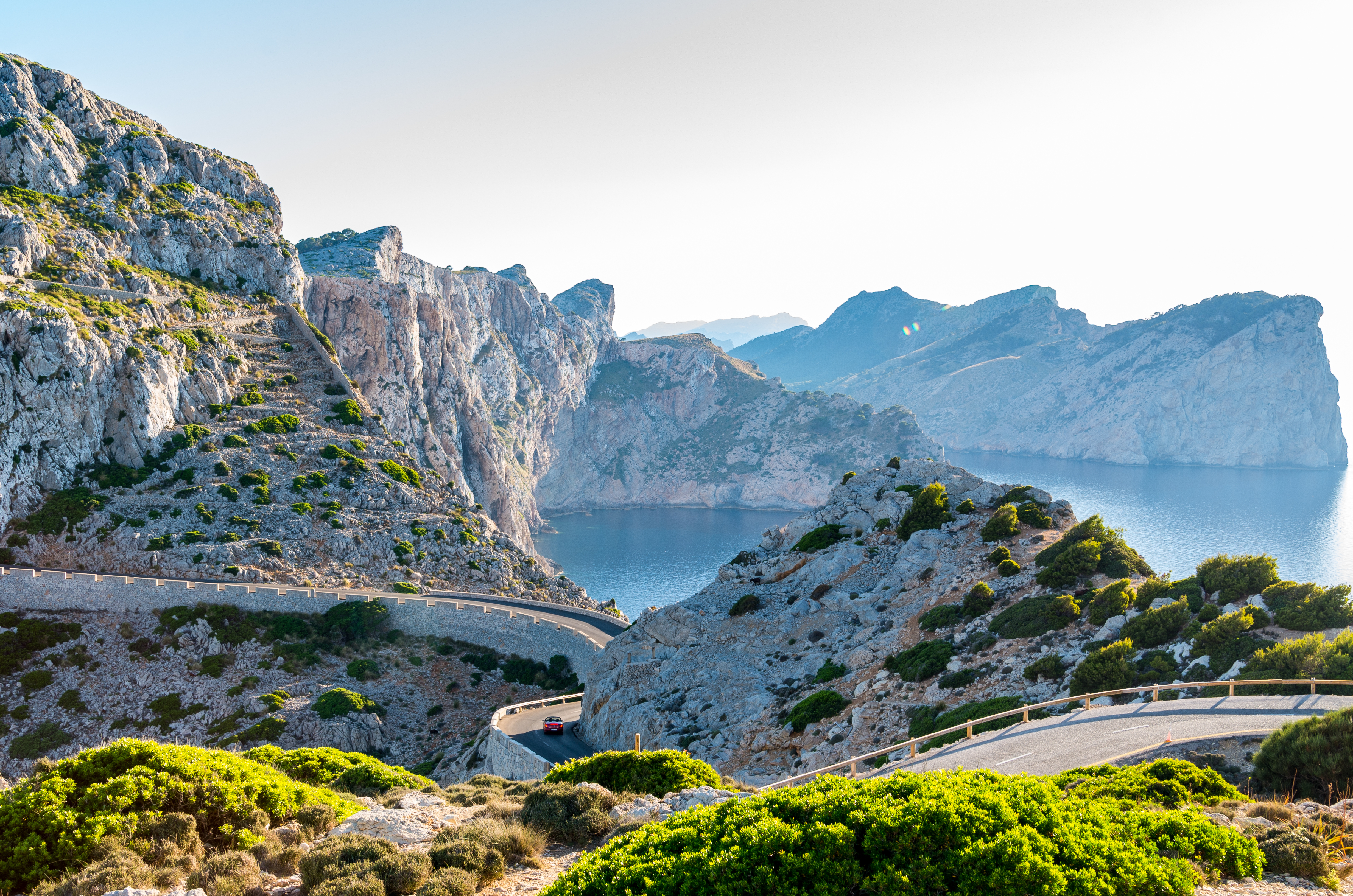
Winding roads through the Cap Formentor (on the northern coast of Mallorca)

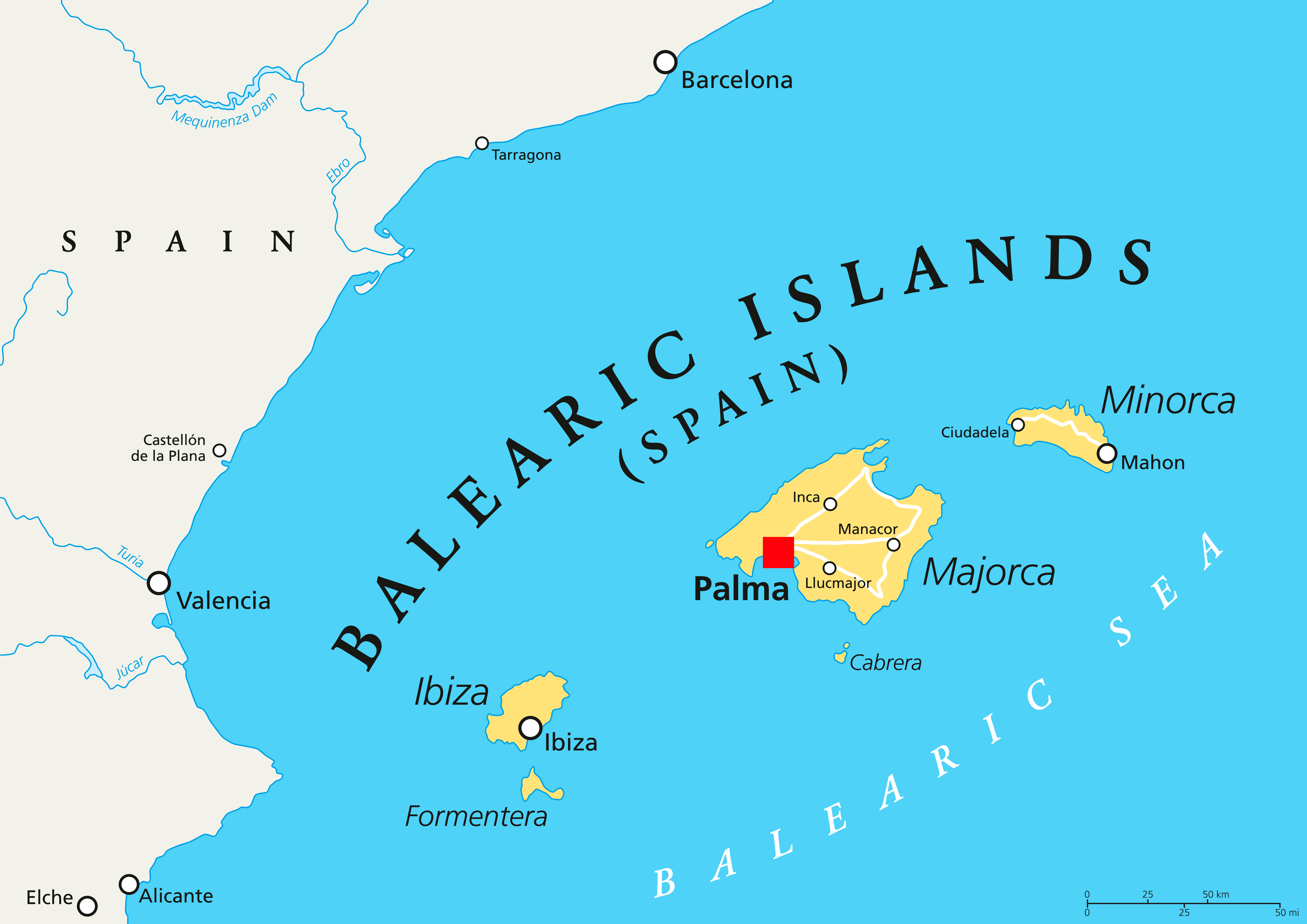
The Terroir of Mallorca: As befits an island sitting on the 39th parallel (145 miles/230 km off the east coast of Spain), Mallorca enjoys a Mediterranean climate with sunny, warm-to-hot summers and mild winters. December and January can be quite rainy, especially on the northern coast.

The Serra de Tramuntana Mountain Range—including the Puig Major, topping out at 4,711 feet/1,436 meters above sea level and the highest point of the island— runs parallel to the northern edge of the island. The northern coastline is rugged, rocky, and punctuated by sweeping bays, caves, and sandy beaches.

The southern portion of Mallorca is covered by the Serra de Llevant mountains; these are not as tall nor as rugged as the mountains on the northern side of the island. The flat, fertile area in the middle—much of it covered with olive, almond, and citrus orchards in addition to vineyards—is the Es Pla (central plains).

The Binissalem DO: The Binissalem DO is located on a plateau of rolling hills just south of the Tramuntana Mountains and otherwise surround by the island’s central plain (Es Pla). Elevation ranges between 820 and 990 feet/250 to 300 meters above sea level. The DO is named for the small town of Binissalem, which serves as the center of the area’s wine industry.

The Binissalem DO—while approved for several different types of wine—focuses on red wines produced on the Manto Negro (Mantonegro) variety. Manto Negro—known for producing lightly-colored red wines with flavors of red and black fruit alongside velvety tannins—is believed to be indigenous to the region; almost all of the 791 acres/320 ha known to be in existence are here on the island of Mallorca. Red wines of darker color, richer flavor, and extended longevity are also produced; these styles typically combine the legally required minimum 30% Manto Negro with Callet, Tempranillo, Monastrell (Mourvèdre), Cabernet Sauvignon, Merlot, Syrah, and/or Gorgollassa (another indigenous red variety).

The white wines of the Binissalem DO —mostly dry but including off-dry and sweet styles—are produced using at least 50% Moll. Moll—also known as Prensal Blanc—is native to the Balearic Islands and grown all over Mallorca (albeit in small amounts; at last count, there are only about 160 acres/65 ha planted on the island). Moll tends to produce neutral-tasting, low-acid wine, but can contribute to a fruity, floral, and lively wine when blended with the island’s plentiful Moscatel Grano Menudo (Muscat Blanc à Petits Grains) and/or Moscatel de Alejandria (Muscat of Alexandria) grapes.

The Binissalem DO is also approved for the production of rosé and sparkling wine; details may be found in the pliego de condiciones (linked below).

The Pla i Llevant DO: The Pla i Llevant DO covers a good portion of the center and southern half of the island. In this context, the name makes sense, as it includes the island’s central plains (Es Pla) and Llevant Mountain Range.

The focus here is on red wines, with approximately 66% of the region’s 475 hectares/1,200 acres of vines planted to red grapes. The leading grape varieties are Merlot and Cabernet Sauvignon, but traditional varieties—including Manto Negro, Fogoneu, Callet, and Gorgollassa—play an important role as well. Monastrell (Mourvèdre), Tempranillo, Syrah, and Pinot Noir are also present.

The red wines of the Pla I Llevant DO are typically blends, and there are no minimum or maximum standards for particular grapes—any single grape or blend of the approved varieties may be used. This makes for some interesting wines!

The white wines of the Pla i Llevant DO are also allowed to be crafted from any single grape and/or blend of the approved varieties. The most widely grown white grapes include Moll/Prensal Blanc, Chardonnay, and Moscatell (Muscat); these are followed by Giro Ros (a native pink-skinned variety), Viognier, Parellada, Macabeo and Riesling.

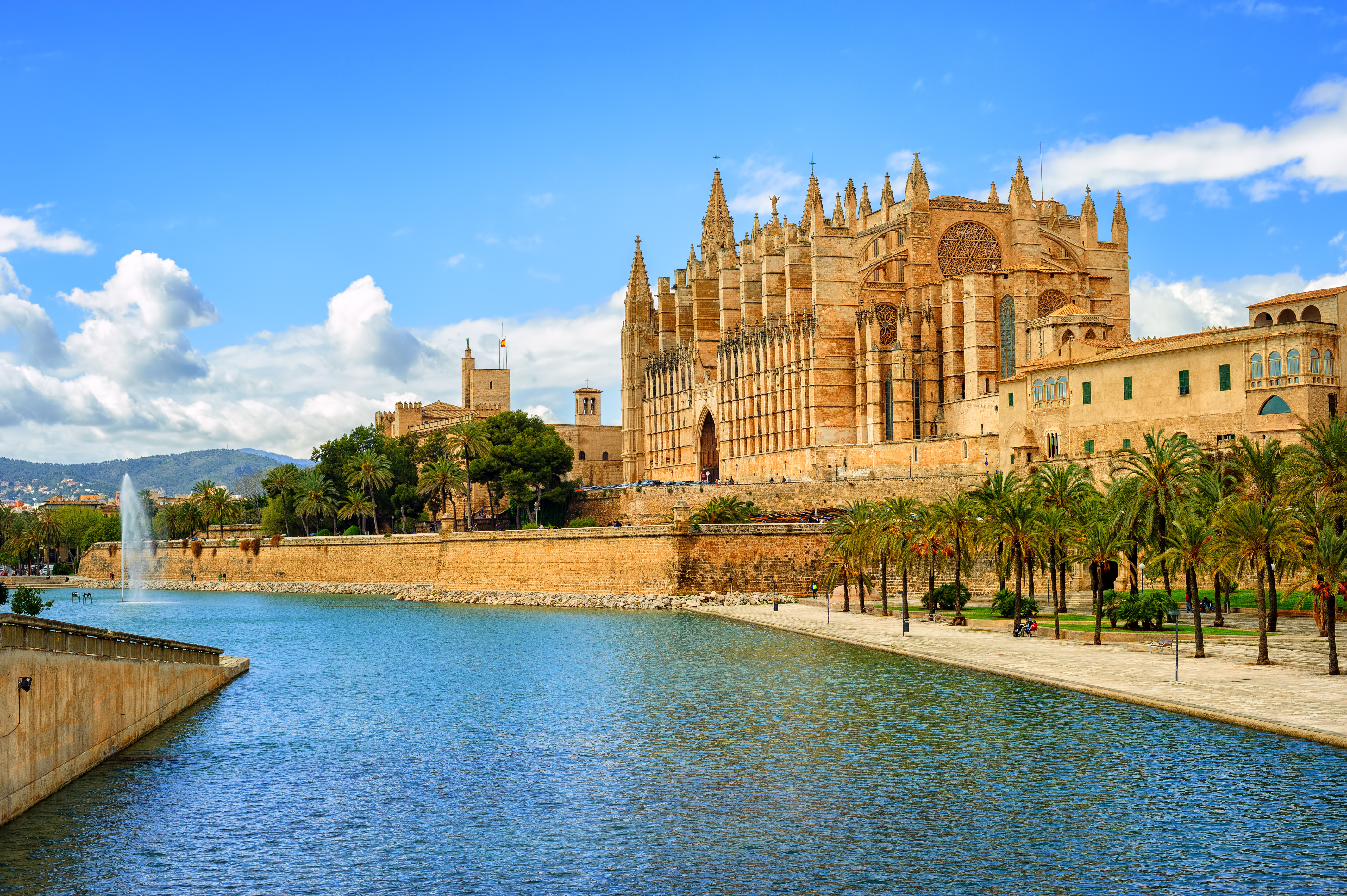
La Seu—the Cathedral of Palma de Mallorca

The Pla I Llevant DO is also approved for the production of rosé, fortified wine (vino de licor), sparkling wine, and semi-sparkling wine (vino de aguja); details may be found in the pliego de condiciones (linked below).

Vinos de la Tierra: Mallorca is also home to two Vinos del la Tierra (VdlT/geographical indications for wine): Vino de la Tierra Mallorca and Vino de la Tierra Serra de Tramuntana-Costa Nord. The Vino de la Tierra Serra de Tramuntana-Costa Nord covers the north coast of the island and the Tramuntana Mountains; the Vino de la Tierra Mallorca appellation covers the entirety of the island. Both Vino de la Tierra regions are approved for red, white, and rosé wines; a long list of grape varieties are allowed; however, the emphasis is on the indigenous varieties including Callet, Manto Negro, and Prensal Blanc/Moll.

Road trip, anyone?

References/for more information:

The Bubbly Professor is “Miss Jane” Nickles of Austin, Texas… missjane@prodigy.net
Travel Daydream: The Spirits of Mallorca

These days, I am doing most of my traveling in my mind, but when I am able, I will be on the next flight to the Spanish island of Mallorca (sometimes called “Majorca” in English). Mallorca and the other Balearic Islands are located about in the Mediterranean Sea, 150 miles/240 km of the coast of Spain.

In addition to the pristine beaches (check out Cala Agulla on the island’s east coast), the cities (check out the sophisticated capital—Palma de Mallorca—or the old town of Alcúdia), and a plethora of amazing activities (you can catch an underground concert in the Caves/Cuevas del Drach)—Mallorca has an amazing local food scene. You’ll want to try Sobrassada (spicy sausage), Trampó (a salad made with local tomatoes, green peppers, and olive oil), and Ensaimadas (a spiral-shaped sweet pastry enjoyed at breakfast or as a snack). The island is also known for several specialty spirits, including two that have been recognized as iconic products of the region.

Here are some details on the spirits of Mallorca:

Palo de Mallorca is a bitter liqueur with a protected geographical indication (GI) for Mallorca since 1989. It is typically served as an aperitif with a bit of soda water and ice. This popular tipple is known as Palo con Sifón, as in “palo with sparkling water spritzed from a siphon.”

Palo de Mallorca is made from an infusion of the quinine-containing bark of the Cinchona tree (quina) and gentian root. These botanicals are bitter-tasting and flavorful, and known to be a preventative and remedy for fevers, malaria, and other maladies. Like most bitters, Palo de Mallorca was first produced as a form of herbal medicine. Sweeteners and caramel coloring were added by later generations to make it more palatable and led to its popularity as an aperitif and for use in cocktails.

Palo de Mallorca is bottled at a minimum of 25% abv and is intended to have a bitter taste balanced by sweetness. It is dark brown-to-almost black in color and shows aromas and flavors of licorice, dried herbs, and caramel. At last count, there were eight brands of Palo de Mallorca in production. Of these, the best known include Tunel, Limsa, Dos Perellons, and Vidal. Alas, to purchase Palo from a store, you’ll most likely need to travel to Europe (but it should be available via online retailers).

The name—palo—translates to “stick,” but is based on palo quina—the island’s traditional name for quina bark.

Herbes de Mallorca is produced using a base of an anise-flavored spirit and infused with other aromatic plants grown on the island of Mallorca. Typical flavorings include lemon verbena, chamomile, rosemary, fennel, and lemon balm as well as local citrus fruit (lemon and orange). Herbes de Mallorca was awarded a protected geographical indication (GI) for Mallorca in 2008.

Herbes de Mallorca may be bottled unsweetened (dry), or with varying degrees of sugar (up to 300 g/L). Dry versions are bottled with a minimum of 35% alcohol by volume, while sweet versions require at least 20% abv.

Herbes de Mallorca has a clear appearance with colors ranging from amber to vivid green. Aromas and flavors are typically described as a combination of anise (licorice), green herbs—fresh and intense), citrus (lemon and orange), and mild floral undertones.

The production of spirits infused with herbs on Mallorca. It is believed that it can be traced back to the establishment of a series of Christian monasteries all around the island in the 13th century. The popularity of the drink soared in the 19th century, when just about every farmer—and many householders—produced their own versions of Herbes de Mallorca.

These days, Herbes de Mallorca is enjoyed as an aperitif or digestif—often on the rocks, with or without a shot of soda water—or as a shot (chupito). A popular cocktail known as Agua de Mallorca combines it together with kiwi fruit (grown on the island) and soda water. Figs—another specialty of Mallorca—are often dried and soaked in Herbes de Mallorca to make a well-preserved and tasty snack.

Herbes de Mallorca is available in the larger wine and spirits markets of the United States or via online retailers. Popular brands include Tunel, Morey, and Mezcladas de Mallorca.

Palma de Mallorca—the island’s capital city

Note: Herbes de Mallorca is the Catalan spelling; the Spanish verion—Hierbas de Mallorca—is also used.

While they are not widely seen outside of Europe, Mallorca also produces a good deal of wine. Check back next week for a post about the wines of Mallorca!

References/for more information:

The Bubbly Professor is “Miss Jane” Nickles of Austin, Texas… missjane@prodigy.net
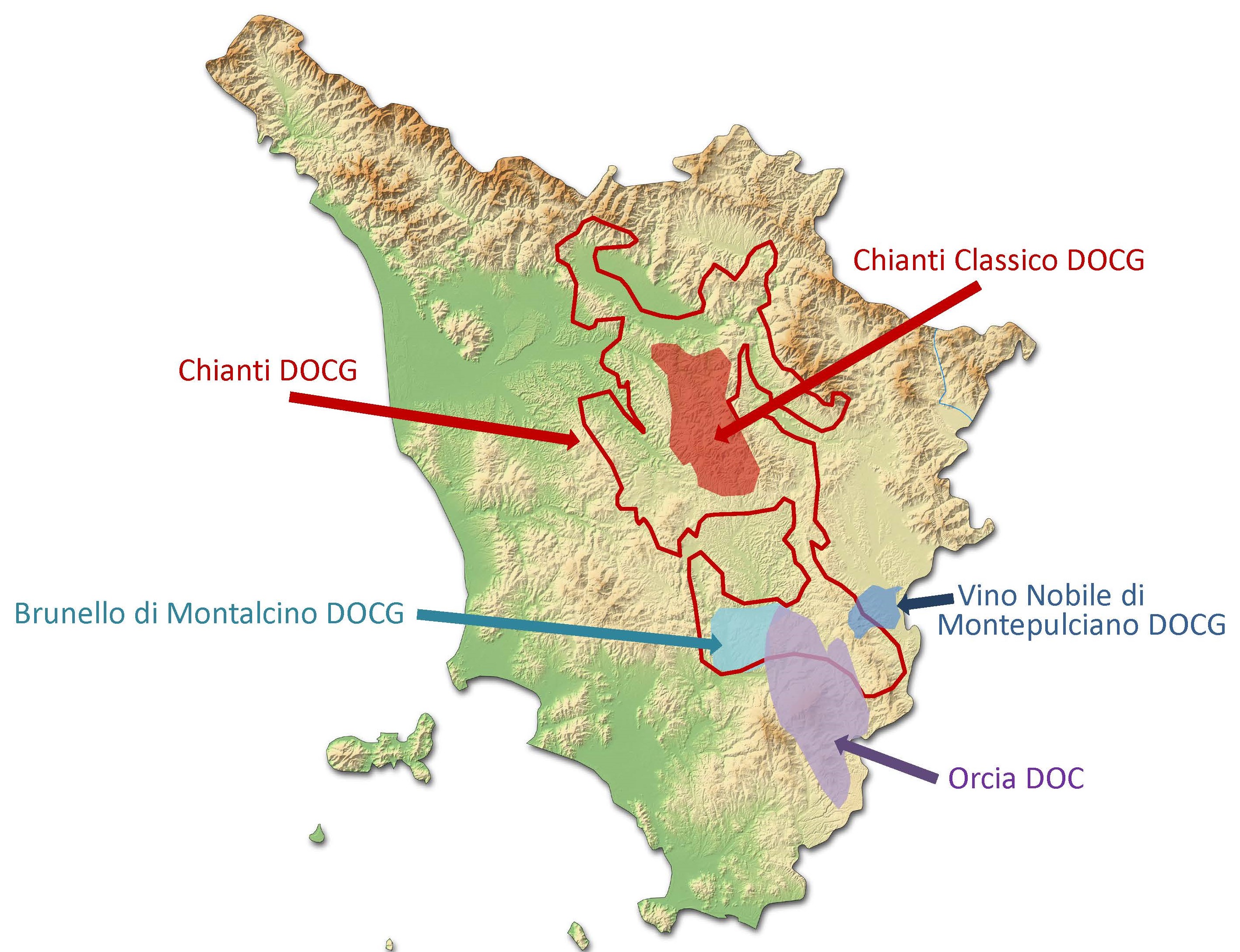
Between Montalcino and Montepulciano: The Orcia DOC

It shares a border with Brunello di Montalcino and overlaps a portion of the Chianti DOCG. It lies just a few miles to the west of the vineyards of Vino Nobile di Montepulciano and is one of Tuscany’s seven UNESCO heritage sites. Yet…you have probably barely heard of this region.

Any guesses?

It’s the rolling hills of the Val d’Orcia (Orcia Valley) and the wines of the Orcia DOC. Located in the rural southern reaches of Tuscany, the Val d’Orcia is dotted with oak forests, castles, wheat fields, olive orchards, and vines.  The road leading to one of its medieval towns—Montichello—is (literally) the picture-postcard view of a Tuscan winding road lined with Cypress trees (check out the photo and you’ll see what I mean).

The Val d’Orcia is tucked into the area south of the hills of the Colli Senesi (the hills of Siena) in the area between the appellations of Montalcino and Montepulciano. Its namesake—the Orcia River—flows through the center of the region and forms a portion of the southern border of the Brunello di Montalcino DOCG before it runs into the Ombrone River and makes its way into the Tyrrhenian Sea.

The Val d’Orcia is made up of picturesque small towns including Bagno Vignoni (and its famous hot springs), Radicofani (and its impenetrable 10th century fortress), and Pienza (the idealized City of Pious, built to the exacting standards of Pope Pious II in 1459). The region is a bit too rustic for normal state-sponsored train service, but locals and tourists alike are happy to ride the 19th century steam engine train connecting the town of Asciano with the Castle of Monte Antico.

In addition to its fascinating history and beautiful vistas, the area is known for its wine. Under the Orcia DOC, several styles of wine are produced, including the following: 

The Chapel of the Madonna di Vitaleta in San Quirico d’Orcia

Orcia Rosso and Rosato: dry red or rosé wine produced using a minimum of 60% Sangiovese; up to 40% of “other non-aromatic red grapes approved for cultivation in Tuscany” are allowed; up to 10% white grapes may be included in the mix.

Varietal Sangiovese is also allowed, using a minimum of 90% Sangiovese grapes; up to 10% (combined) Canaiolo Nero, Colorino, Ciliegiolo, Foglia Tonda, Pugnitello, and/or Malvasia Nera is allowed

Orcia Bianco: dry white wine produced using a minimum of 50% Trebbiano Toscano; up to 50% of “other non-aromatic white grapes approved for cultivation in Tuscany” are allowed

Vin Santo: off-dry to sweet white wine (based on Trebbiano Toscano and/or Malvasia Bianca), grapes must be dried to a minimum of 26% sugar post-harvest; must be aged in small wooden barrels until November 1 of the third year following the harvest (or longer)

While you are on your road trip through the Val d’Orcia, you’ll want to sample some of the local foods along with all that local wine. The area is known for thick, hand-rolled pasta known as pici or lunghetti, white truffles, Chianina Beef (the “white giants” of the cattle world), and Pecorino Cheese. You won’t go hungry or thirsty, and there is no chance you will get bored. Road trip!

References/for more information:

The Bubbly Professor is “Miss Jane” Nickles of Austin, Texas… missjane@prodigy.net


Five Fast Facts about Saint-Pourçain

Saint-Pourçain—one of the five AOCs often described as the appellations of Central France—is an obscure appellation located in the Allier Department. Even though its wines are not typically found outside of Western Europe—the area is planted to a mere 1,480 acres/600 ha of vines—the region holds a fascination all its own. Read on for some interesting tidbits about the little-known Saint- Pourçain AOC.

#1—Saint-Pourçain is considered one of the oldest vineyards in France. Like many regions in France, the wines of Saint-Pourçain are well-documented from the start of the Middle Ages and are known to have received some notoriety in pre-revolutionary France. However, viticulture in Saint-Pourçain and throughout the (present-day) Allier Department can be traced back to the time of the Romans. Some people even believe that viticulture in the area dates as far back as the Phoenicians (pre-BCE), who founded the colony of Cantilia in the present-day commune of Chantelle.

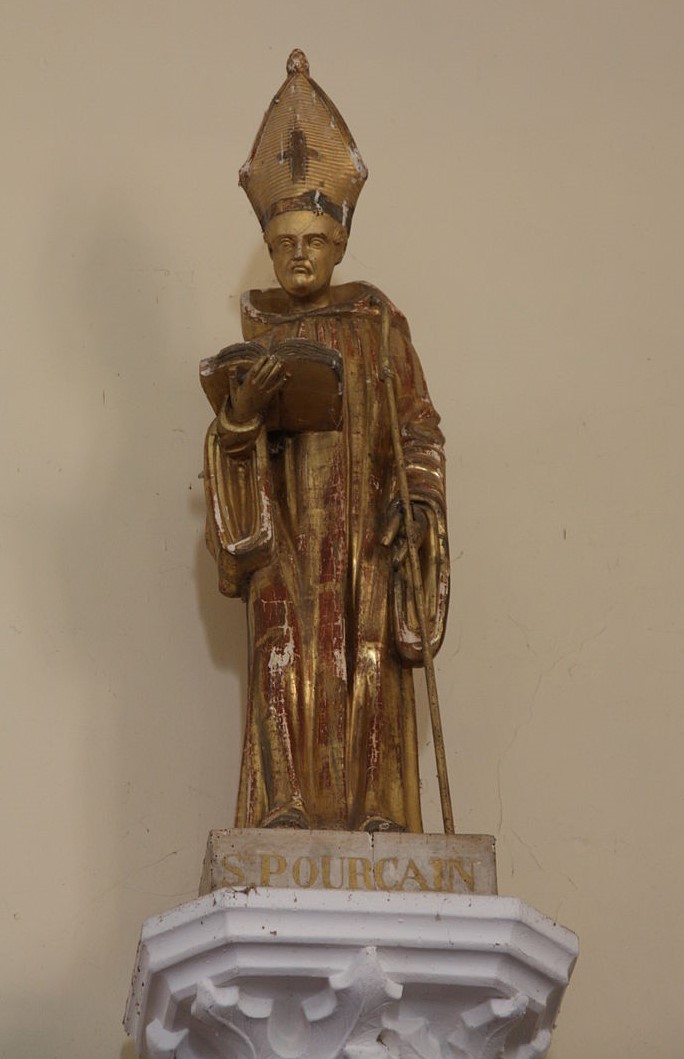
Statue of Saint Pourcain in the Église de Monestier via Wikimedia Commons

#2—There was an actual Saint. Saint Pourçain—also known as Portianus—lived in the area sometime in the sixth century. A former slave—freed from a brutal master during the Roman occupation of Gaul—he lived as a hermit and founded a monastery on the banks of the Sioule River. He is credited with performing many miracles that benefited the inhabitants of the area—including restoring the sight of his blind owner, which led to his freedom. Another miracle involved giant serpents emerging from an amphora of wine and the subsequent release of a group of prisoners. It is said that Portianus/Pourçain was so beloved that at the time of his death (circa 532) the people of the area changed the name of their town from Mirendense to Saint Pourçain.

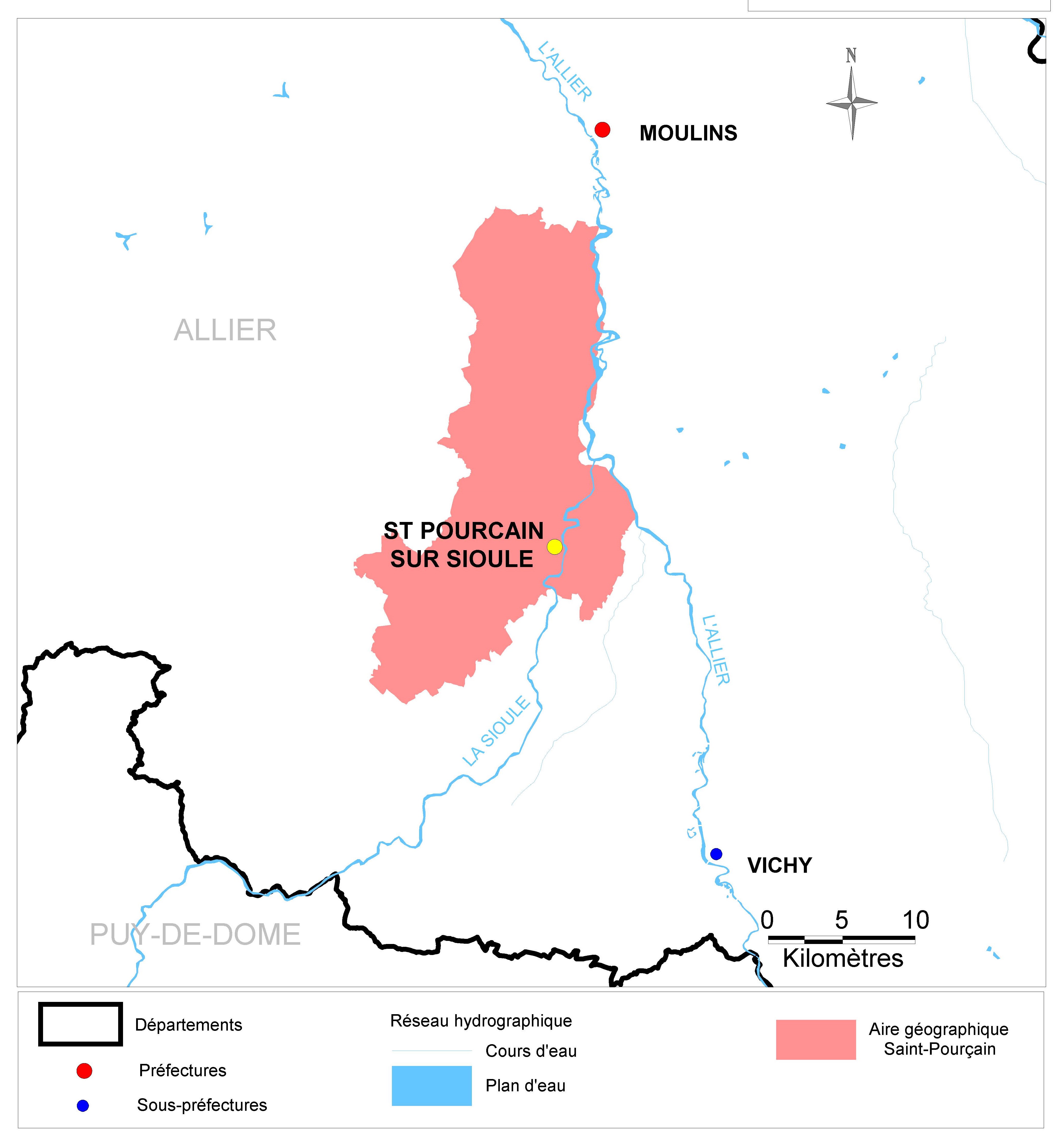
#3—The appellation is named after the town of Saint-Pourçain-sur-Sioule. Located near the geographic center of France, Saint-Pourçain-sur-Sioule lies just to the west of the Allier River. The Sioule River (a left tributary of the Allier) flows—from its source in the Massif Central—north/northeasterly directly through the town; it joins the Allier about 10 km/6 miles beyond its northern edge.

#4—Saint-Pourçain is sometimes considered a “lost vineyard of Burgundy.” In many reference books, the appellations of Central France—including the Saint- Pourçain AOC—are grouped with the other appellations of the Loire (Sancerre and the other appellations of the Eastern Loire are located about 75 miles/120 km to the north). However, it can be argued that the only true connection between the appellations of Central France and those of the Loire Valley is the river itself. On the other hand, in terms of landscape, architecture, terroir, and even the wines themselves, Saint- Pourçain has more in common with Burgundy. The topography—in terms of rolling hills punctuated by valleys and plateaus as well as south/south-east facing slopes—is similar, as is the latitude. Saint-Pourçain sits at 46°N, the same parallel as the southern Burgundy town of Mâcon, located about 73 miles/117 miles to the east.

Map of the Saint Pourcain AOC via the INAO

#5—Like Burgundy, the Saint-Pourçain AOC produces red, white, and rosé. Like most of the wines produced in Burgundy, the wines of Saint-Pourçain are required to be dry and tranquille (still/non-sparkling).  The grape varieties—based around Chardonnay, Pinot Noir, and Gamay—are Burgundy-esque as well. For the record, the encépagement (plantings) allowed for use in the wines of the Saint-Pourçain AOC are as follows:

  • Rouge/Red: 25% to 60% Pinot Noir; 40% to 75% Gamay
  • Blanc/White: 50% to 80% Chardonnay; 20% to 40% Tressalier (known in Burgundy as Sacy); up to 10% Sauvignon Blanc
  • Rosé: 100% Gamay

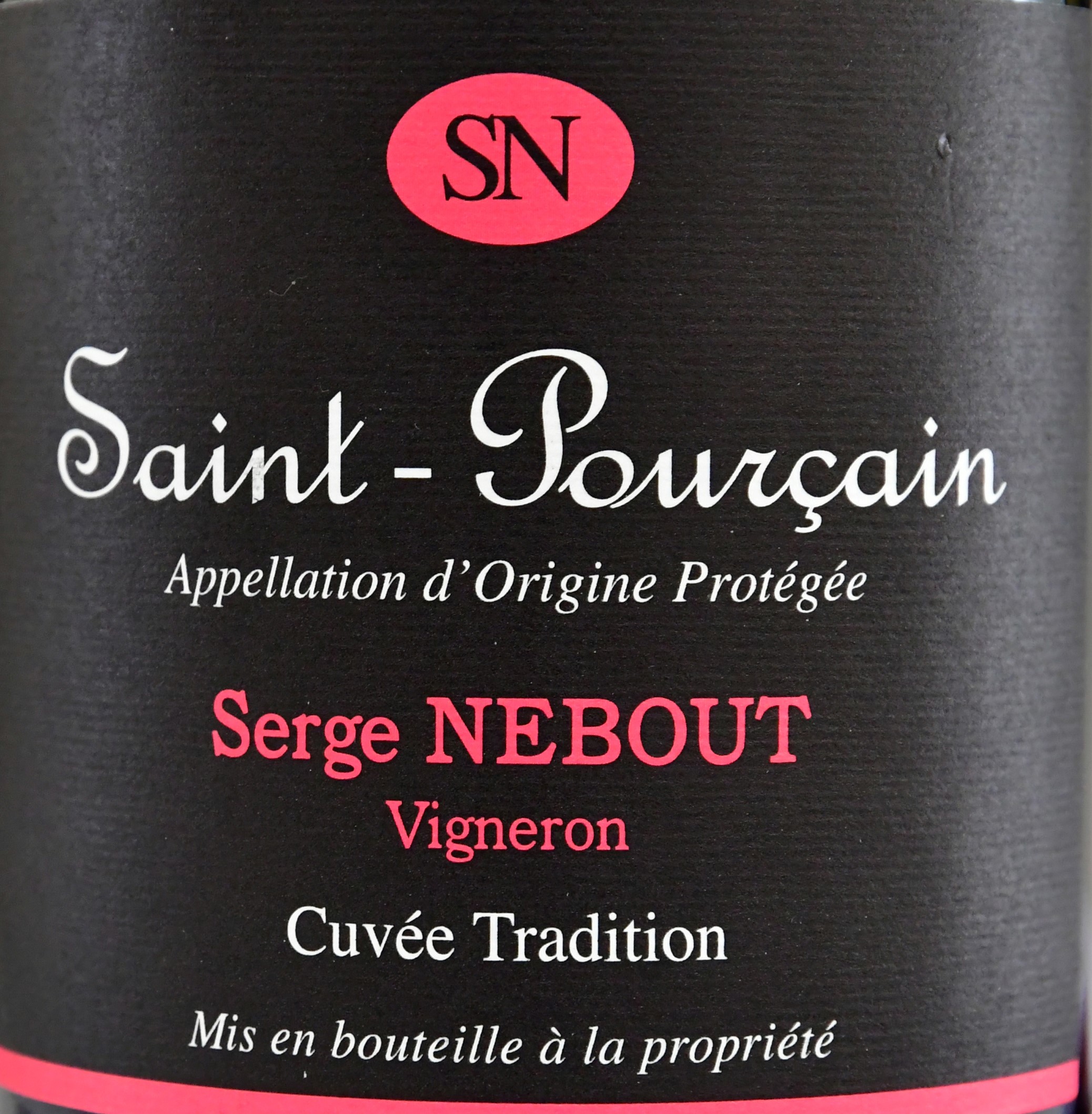
 There are currently about 20 wineries in the Saint-Pourçain AOC; noted producers include Domaine des Berioles and Domaine Nebout. The local co-op, Cave de Saint-Pourçain, is the majority producer.

References/for more information:

The Bubbly Professor is “Miss Jane” Nickles of Austin, Texas… missjane@prodigy.net
Wine Geo: The Allier

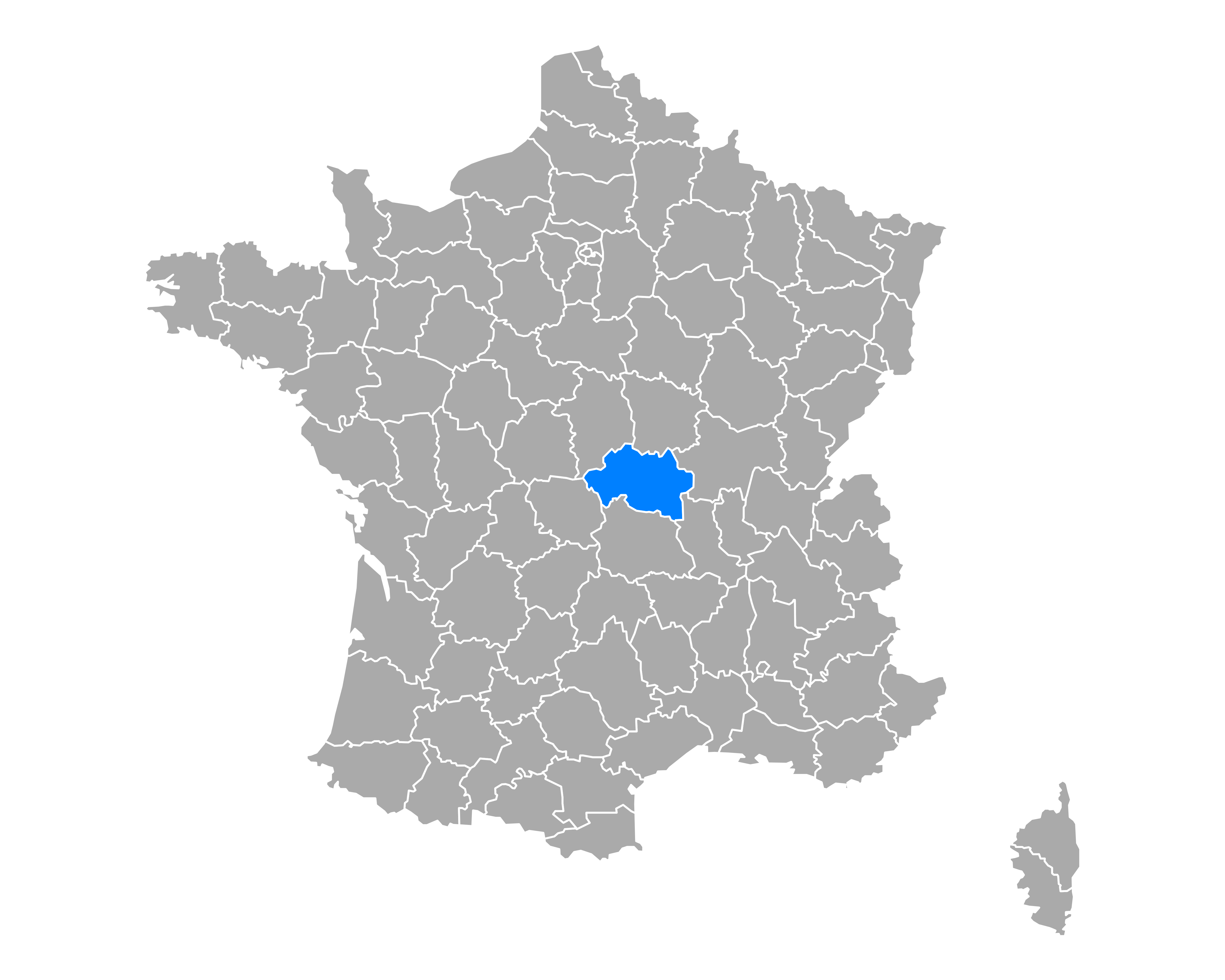
The Allier Department

There is a lot to love about the Allier: it’s a river…it’s a department…it’s the former Duchy of Bourbonnais!

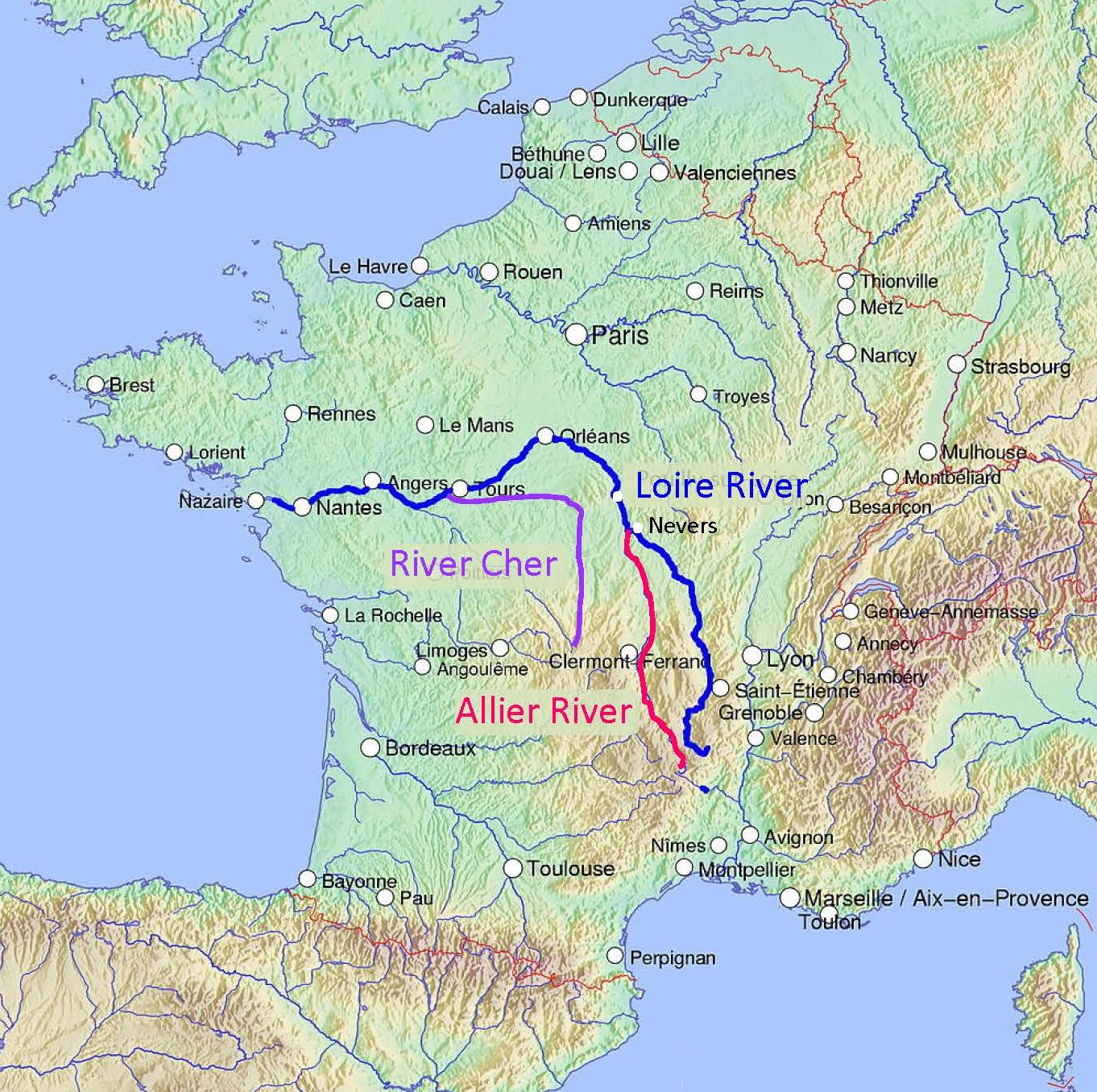
It’s a department: The Allier is a department (political area similar to a county) situated smack-dab in the center of France, within the Auvergne-Rhône-Alpes region. Its namesake—the Allier Rive—flows through its center, while the Loire and Cher wind their way to the east and west. The main cites of the Allier Department include Moulins, Vichy, and Montluçon. Much of the Allier department is located on land that once-upon-a-time housed the Duchy of Bourbonnais, and inhabitants are sometimes referred to as Bourbonnais. In addition to over 500 castles, the Allier department is home to forests, ponds, woodlands, pastures, and vineyards. Notable products include Charroux Mustard, Charolais Beef, Tronçais Oak, and wine from the Saint-Pourçain AOC.

It’s a river (a left tributary of the Loire): The Allier River flows north for 262 miles/421 km from its source in the Massif Central to a point about 4 miles/6 km west of the city of Nevers, where it joins the Loire. The point where the Allier joins the Loire is about 26 miles/42 km south of Sancerre.

There are vineyards: The Allier River helps to define several of the wine regions of Central France, with the Saint-Pourçain AOC located right on the Allier River and completely within the Allier Department. The Côtes d’Auvergne AOC—located to the south of Saint-Pourçain in the Puy-de-Dôme Department—is also directly on the river. These two appellations are—quite literally—located very close to the geographic center of France and as such, are sometimes grouped together (with a few others) as the“appellations of Central France.”

For serious wine students only: the other appellations included in the “appellations of Central France” group include the Châteaumeillant, Côte Roannaise, and Côtes du Forez AOCs. Keep in mind that this is an informal grouping and there is no official appellation with a title referring to “Central France.”

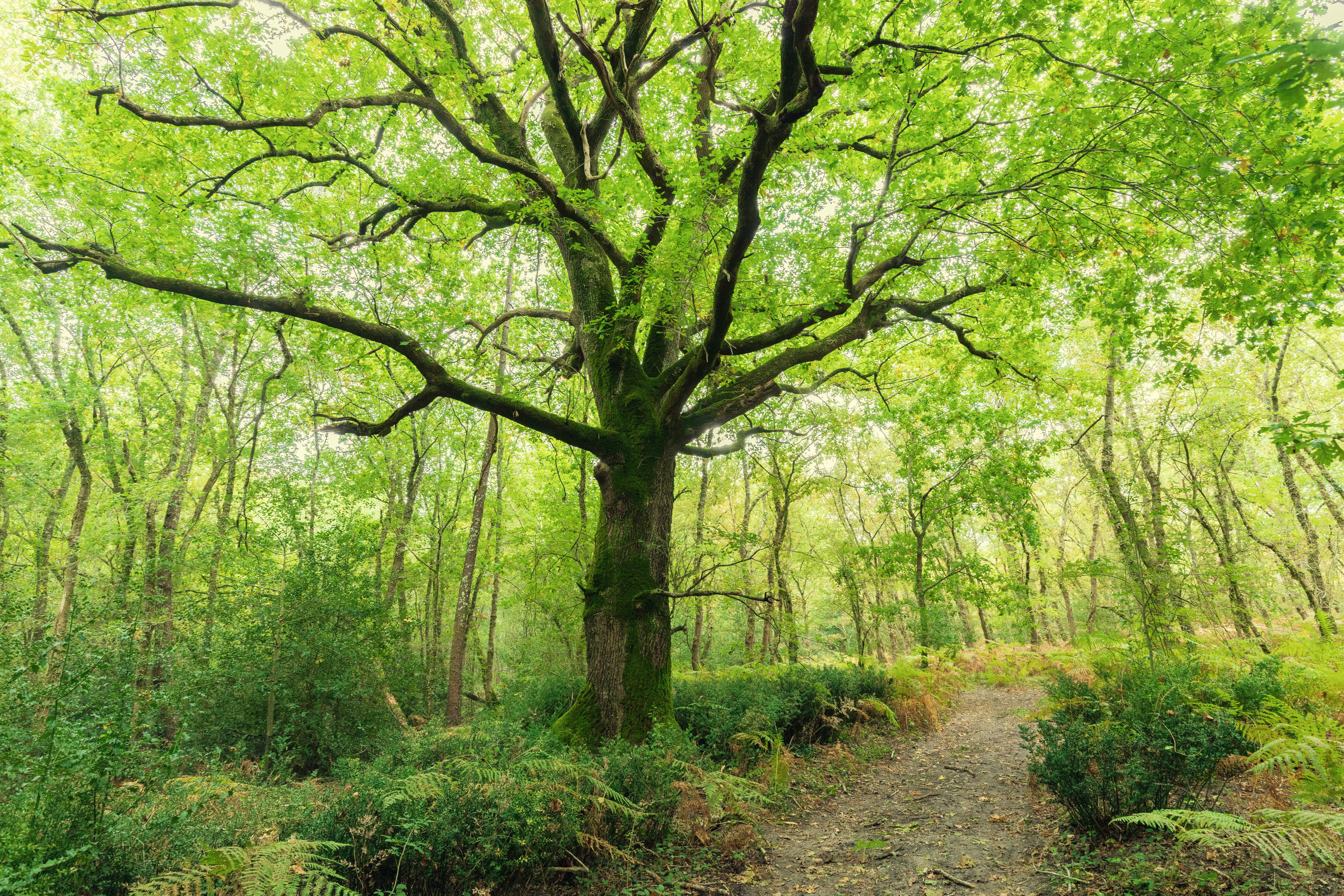
There are forests and trees: Oak from the Tronçais Forest (Forêt de Tronçais)—located in the northwest quadrant of the Allier Department—is used to produce some of the most renowned oak barrels in the world. Interestingly, the Tronçais Forest is not part of the primeval (untouched) forest that once covered most of France but was planted in 1670 under the order of Jean Baptiste Colbert—a minister in the court of Louis XIV—to supply the French Navy. These days, the Tronçais Forest is considered one of the principal oak forests of Europe. The forest is largely planted to Sessile Oak (Quercus petraea). The ancient name for Sessile Oak was Tronce, from which the forest derives its name. Other trees in the Tronçais Forest include Scots Pine, Beech, Larch, and Common Oak (Quercus robur).

Sessile Oak trees thrive in high-density plantings, such as those found in the Tronçais Forest. In a high-density forest, the greater competition for water, sunlight, and nutrients causes the trees to grow slowly, with little space between the annual growth rings. This leads to oak (and oak barrels) with a tighter, smoother grain and a lighter transfer of oak-derived flavor to the wine.

References/for more information:

The Bubbly Professor is “Miss Jane” Nickles of Austin, Texas… missjane@prodigy.net
Confusion Corner: Sacy

This is undoubtedly one of the more obscure topics ever to be addressed in Confusion Corner, but nevertheless, it sparked my interest!

Sacy: it’s a grape, it’s a place, it’s a Premier Cru Village in Champagne!

Sacy the grape: Sacy is a rather nondescript white variety, believed to be one of the many offspring of Pinot X Gouis Blanc. It is a high-yield grape known for making lightly flavored, crisply acidic wines with aromas of white flowers, green apples, and yellow pears. Sacy is cultivated mainly in central and northern France—particularly in the Yonne and the surrounding areas between Burgundy and Paris. Plantings of Sacy have declined rather steadily since the 1950’s; while at one time there were close to 700 hectares/1,730 acres planted in France, these days the number is closer to 71 hectares/176 acres.

Sacy-the-grape is allowed to be used in just three of France’s 400-plus AOC wines: Crémant de Bourgogne, Coteaux Bourguignons, and Saint-Pourçain. It is, however, allowed in several of France’s PGI/Vin de Pays appellations, including the Vin de Pays de l’Ardèche, the Vin de Pays du Val de Loire, and the Vin de Pays des Comtés Rhodaniens.

In the Crémant de Bourgogne AOC, Sacy is allowed to be used in just about any amount, provided that at least 30% of the base wine is comprised of Chardonnay, Pinot Gris, Pinot Blanc, and Pinot Noir (in any combination). In the Saint-Pourçain AOC, Sacy is required to comprise at least 20%—but no more than 40%—of the blend, which is dominated (50% to 80%) by Chardonnay.

Sacy can be used without limits in the Coteaux Bourguignons AOC, provided the vines were planted prior to July 31, 2009. One must—however—dig pretty deep in order to find out how Sacy is allowed to be used in the wines of the Coteaux Bourguignons AOC. This factoid is not listed in the “approved varieties” at the top of the appellation’s list of rules and regulations (the Cahier des Charges); but is rather tucked into the fine print of the document (specifically, in Article XI—Measures Transitoires). Domaine Gueguen, located in Chablis, is one of the few wineries to produce a 100% Sacy bottled under the Coteaux Bourguignons AOC.

For some reason, Sacy appears to have taken its name from a village in Champagne. The grape goes by several other names as well, including Aligoté Vert, Plant de Sacy, and Tressallier. Tressallier—a term derived from beyond the Allier—is the name used in the Saint-Pourçain AOC, which just happens to be located to the west of the Allier River.

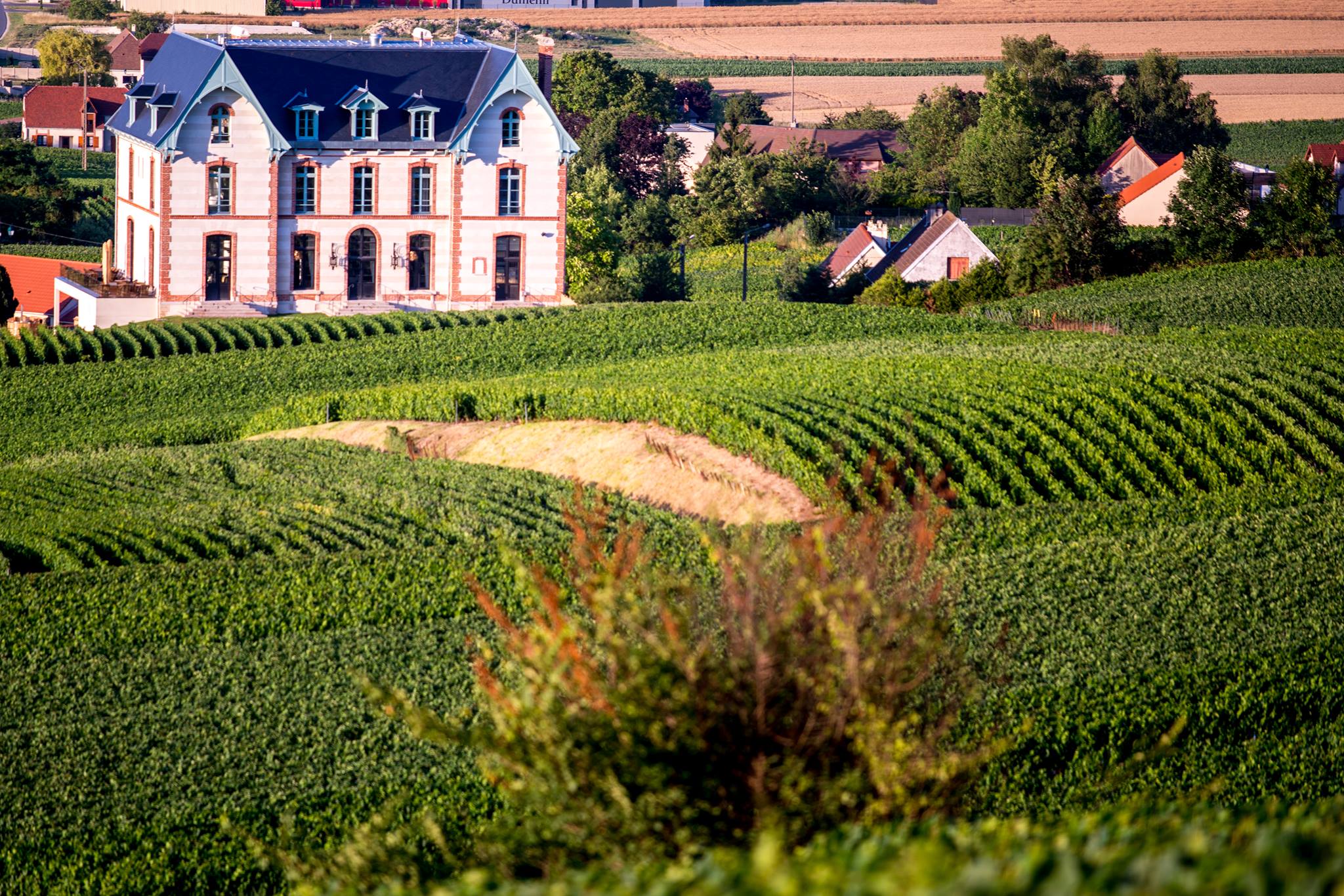
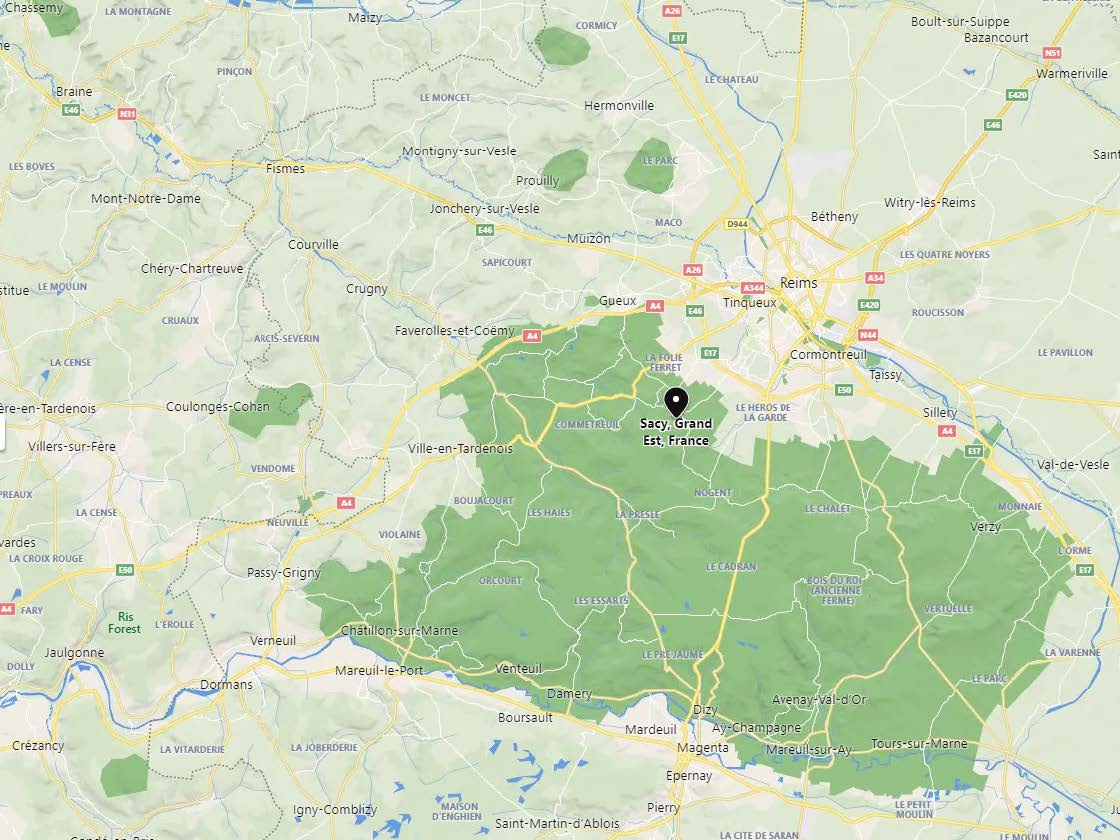
Sacy the place: Sacy is a small town/commune/village (population: 375) located about an hour-and-a-half drive (heading east/northeast) from Paris. The best place to stay in town (imho) is the beautiful Château de Sacy—built in the mid-1850’s by Pierre Louis Gosset (one of the area’s most famous architects) and proudly standing as one of the few remaining residences built before WWI.

When you are in Sacy-the-small-town, you are smack-dab in the middle of the Champagne District—it is less than a 20-minute drive to Reims—so your obvious choice of activities will involve vineyard-wandering and touring wine estates. Champagne producers located in Sacy include Champagne Wafflart Briet, Blin-Dezautez Gérard, Damien Dumez, and Champagne Duménil. These can all easily be reached from the Château de Sacy (and each other) via taxi—or, if you are feeling fit, you could walk (round-trip, the loop is only about 2.6 km/1.6 miles).

Map of Sacy via Bing Maps

Sacy the Premier Cru Village in Champagne: Sacy (the small town/village) has the honor of being one of the 40-plus Premier Cru villages in Champagne, and one of 25 located in the Montagne de Reims. Sacy is surrounded on three sides by other Premier Cru Villages: Ville-Dommange to the north, Écueil to the south, and Bezannes to the west.

Keep in mind that—however disjointed it may seem…Sacy-the-grape is not allowed to be used in the wines of the Champagne-Sacy Premier Cru AOC (or any other wines of the Champagne District).

Other Sacys: The term “Sacy” is used in other contexts as well. It shows up in the name of a well-regarded Champagne Estate—Louis De Sacy Champagne—located in the town of Verzy (about 19 km/12 miles from Sacy). It may also refer to Antoine Issac Silvestre de Sacy (a French scholar and nobleman, 1758-1838); a Brazilian soccer player (full name: Gustavo Rossi); or as an acronym for “School Age Children and Youth.” Go Sacy!

References/for more information:

The Bubbly Professor is “Miss Jane” Nickles of Austin, Texas… missjane@prodigy.net
(A Pound of) the Legendary Fernet-Branca Cure

Paging Doctor Fernet...

Paging Doctor Fernet…

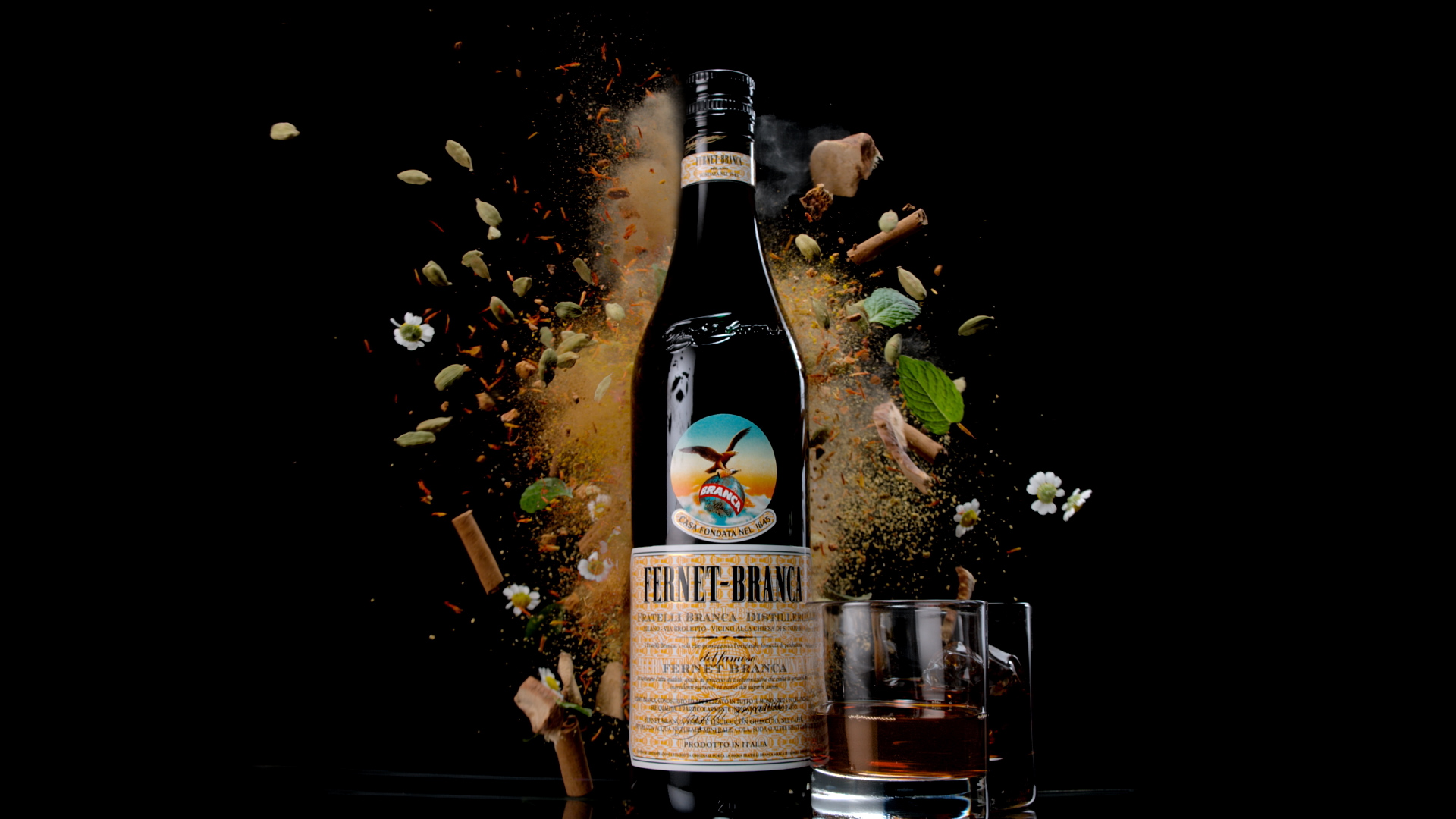
Usually, an ounce of prevention is best. However, at this time of year, perhaps we should just go straight for the cure. For many people, a shot of Fernet-Branca is a lengendary cure—for a long night of drinking, or whatever ails you. While its flavor  has been variously described as “a smack in the face with a eucalyptus branch1” and “a cross between medicine, crushed plants, and bitter mud2,” these are terms of endearment and the taste (once it has been acquired) is crave-worthy.

The legends of Fernet-Branca take many forms, including history, cocktails, secret ingredients, and curative properties. Read on for a few of the legends of Fernet-Branca!

Paging Doctor Branca: Fernet-Branca was invented in Milan in 1845 by Bernadino Branca, a self-taught herbalist. The name “Fernet” comes from one Doctor Fernet—a fictional Swede with whom Branca originally shared credit for the drink, presumably to add authority to his claims of the drink’s health benefits. According to the story, the “renowned liquor” had helped Dr. Fernet and several members of his family to live for over one hundred years.

A Corner on the Saffron Market: Fernet-Branca has been produced using its original recipe since its inception. The exact formula is a trade secret, but is known to contain cinchona bark, bitter orange, aloe, chamomile, myrrh, cardamom, gentian, peppermint, anise, and bay leaves. It is rumored that saffron is also a key ingredient, so much so that the makers of Fernet-Branca have a (rumored) corner on a large percentage of the world’s saffron market.

Tastes like (Poison) Iodine: In 1960, the legendary Broadway actress Betsey Von Furstenberg played a joke on Tony Randall, and “spiked” his on-stage drink with Fernet-Branca. Upon tasting it, Tony believed that he had just swallowed iodine and thought he was being poisoned. Laughing no longer, Ms. Von Furstenberg was suspended from the Actor’s Equity Union for 60 days for her role in the prank.

The Bartender’s Handshake: Fernet’s recent popularity in the United States is attributed to its adoption by bartenders—beginning in San Francisco and soon spreading to Los Angeles, New York, Las Vegas, and other major cities. In these cities, bartenders often end their shift with a quick shot of Fernet—taking advantage of its ability to calm the stomach and the mind. These days, Fernet may be referred to as “the bartender’s handshake,” as a quick shot of Fernet is the preferred first order of many hospitality insiders, and a complimentary shot of Fernet is a typical method of greeting one’s fellow bartenders when they visit your bar.

A New Year’s Toast with Fernet:  The drink’s numerous medicinal claims—which included being prescribed for fever, cholera, intestinal parasites, colds, and menstrual cramps—came in handy in San Francisco during American Prohibition where it was still legal for sale in pharmacies, as a medicine. This was the beginning of the City’s love affair with Fernet, where it has become such a cult favorite that in some bars and restaurants, a midnight toast of Fernet-Branca is raised just before midnight on New Year’s Eve, in lieu of Champagne.

Hanky-Panky: A Fernet-based cocktail known as the Hanky-Panky was invented by in 1903 at the Savoy Hotel in London. One of the bar’s regular customers was an Edwardian Actor named Charles Hawtrey. One night after a performance, Hawtrey came into the bar and asked for something “with a bit of a punch.” The bartender, Ada “Coley” Coleman, created a variation on a martini using gin, sweet vermouth, and a dash of Fernet-Branca. When Hawtrey tasted it, he acclaimed, “By Jove! That is the real hanky-panky!”

1http://www.littledenblog.com/blog/classic-cocktails-the-negroni

2http://www.romefile.com/food-and-drink/fernet-branca.php

References/for further learning:

The Bubbly Professor is “Miss Jane” Nickles of Austin, Texas… missjane@prodigy.net


Wine Grape Cheat Sheets: Sémillon

The Soundbyte: Sémillon is a golden-skinned white wine grape known primarily for its close association with Sauvignon Blanc, as exemplified by the Sauvignon/Sémillon blends of Bordeaux and its many imitators worldwide.  However, Sémillon is increasingly seen as a stand-alone variety—particularly in the Hunter Valley Region of Australia, where it seems to have found its second home.  Sémillon has a well-documented susceptibility to Botrytis and is often made into dessert wines.  It is the most widely planted white wine grape in Bordeaux, particularly in and around Sauternes (the most famous of the botrytis-affected wines of France).  As a matter of fact, the most famous Sauternes of them all—Château d’Yquem—is reportedly 80% Sémillon in most years.

Note: outside of France, the grape is often spelled without the accent on the e (Semillon). Both spellings should be considered correct. 

Typical Attributes of a Sémillon Based Wine:

  • The grapes are hardy in the vineyard and relatively easy to cultivate.  They are fairly resistant to disease, but as luck would have it, are quite susceptible to Botrytis.
  • Sémillon tends to have moderate acidity, which is most likely why it became the world’s best blending partner for Sauvignon Blanc, which tends to scream with acidity.
  • Sémillon tends to have good extract, and a rich, somewhat oily texture or weight—this may be referred to as a waxy character.
  • Varietal Sémillon tends to have medium to high levels of alcohol.
  • Sémillon tends to be low on aromatics when made into a varietal, which is another reason why it does so well with the intensely aromatic Sauvignon Blanc. 
  • Sémillon-based wines are sometimes described as rather “bland” in their youth, but this is one of the rare white wines that can transform with age.  Older versions can take on a hazelnut, toasty richness. Oak aging also helps create a more complex wine and—along with malolactic fermentation—can encourage aromas of butter, cream, vanilla and smoke.
  • An interesting wine-tasting term that is often used to describe Sémillon is lanolin, which is actually a substance found in wool and used in cosmetics (!).  In winespeak the term refers to a smooth, creamy impression that might be considered to opposite of tart or sharp. 

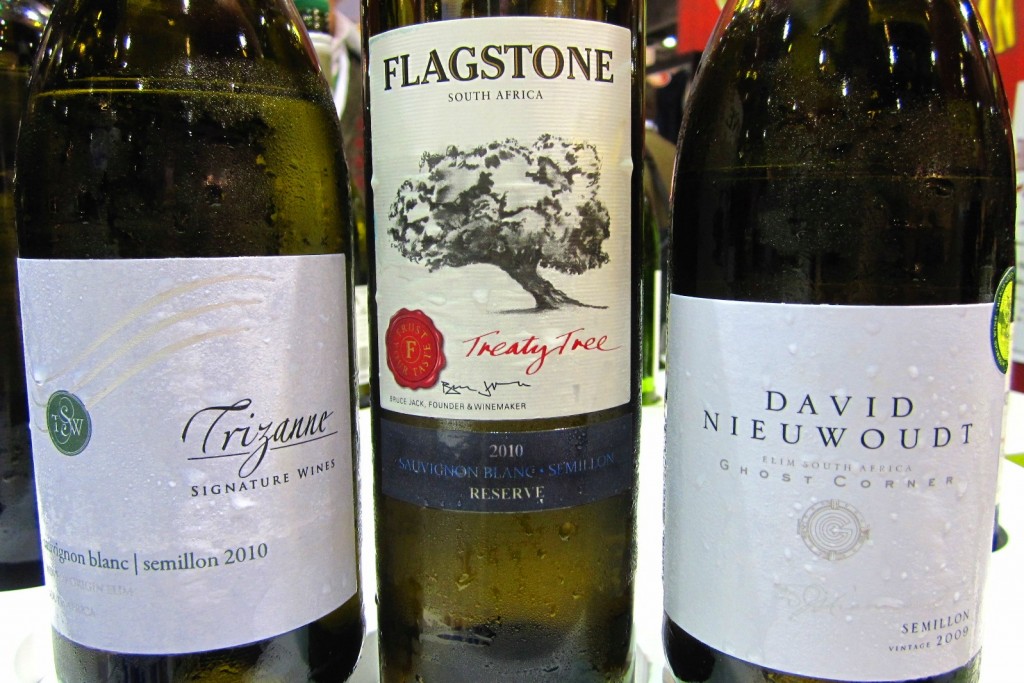
semillon bottlesTypical Aromas of a Sémillon Based Wine:

Fruity:  Apple, Pear, Lemon, Nectarine, Grapefruit, Melon, Fig, Date  

Herbal/Spicy:  Saffron, Vanilla, Dried Herb

Vegetal:  Green Grass, Asparagus, Bell Pepper 

Botrytis-affected Versions:  Apricot, Dried Apricot, Quince, Peach, Honey, Pineapple, Vanilla, Butterscotch, Curry

Oaked Versions:  Vanilla, Sweet Wood, Toast, Smoke, Oak, Coconut

Where The Best Sémillon is Grown:

  • The Southwest of France, particularly Bordeaux, where it most likely has its native home.  Sémillon is the most widely planted white grape in Bordeaux, particularly in Sauternes where it may claim up to 80% of the vineyard property.  Of course, it shares the white Bordeaux blend with Sauvignon Blanc and sometimes a dash of Muscadelle, so it has remained somewhat out of the spotlight. But be sure…Sémillon rules the white Bordeaux world.
  • Australia’s Hunter Valley, which has become Sémillon’s adopted home in much the same way that Malbec has taken to Mendoza. Hunter Valley is a leading producer of 100% varietal Sémillon.
  • In other parts of Australia, Sémillon is used as a blending partner for Chardonnay as well as in Bordeaux-inspired Sémillon-Sauvignon Blends.
  • The Côtes de Gascogne—an IGP/Vin de Pays area in the Armagnac region, is heavily planted to Sémillon.
  • The Loire Valley has a smattering of Sémillon, as does Portugal, Israel, Argentina, Chile, California, Washington State, New Zealand, and South Africa.

semillonFood Affinities – Base Ingredients:

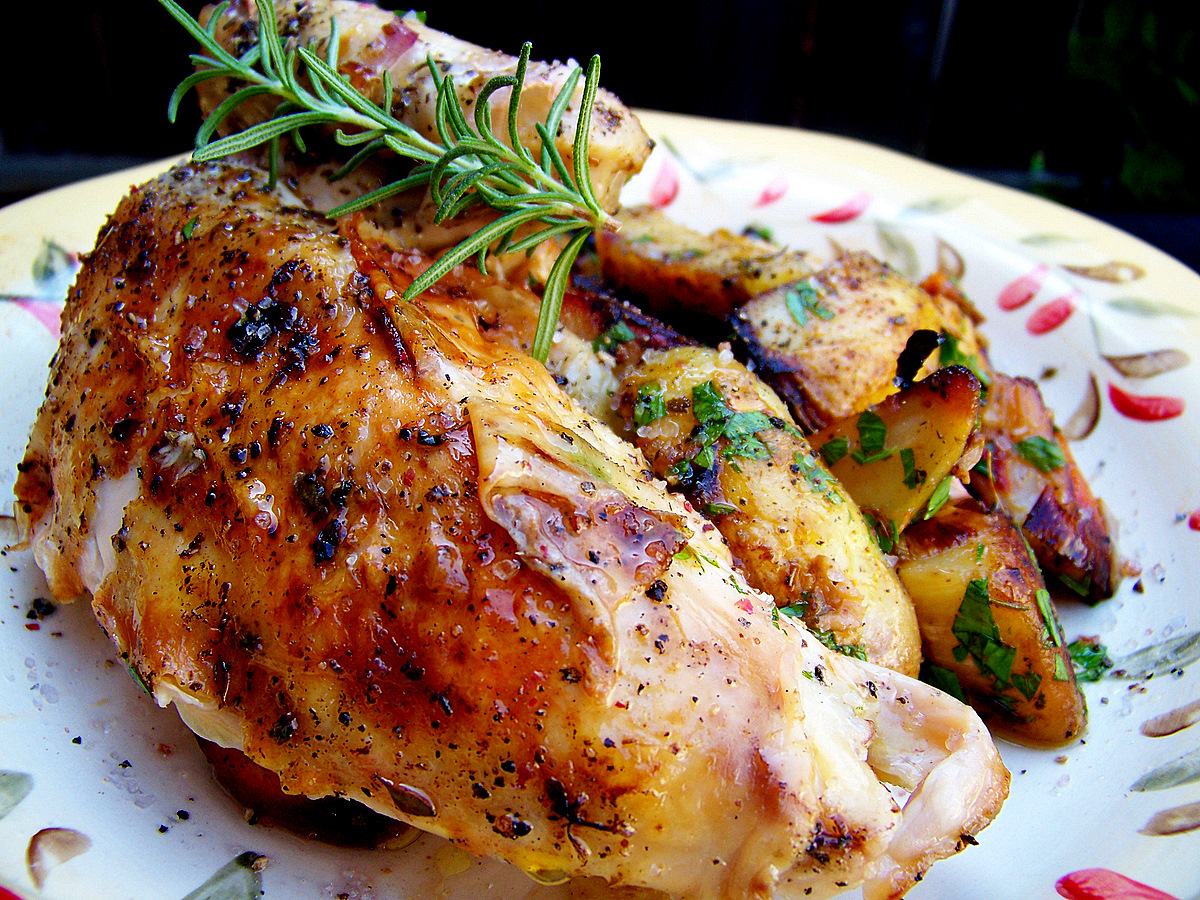
  • Roast Chicken with Herbs!
  • Seafood of all kinds…try Classic French Steamed Mussels
  • Poultry, Duck, Veal, Pork…

Food Affinities – Bridge Ingredients:

  • Corn, Pumpkin, Squash, Polenta
  • Coconut, Apples, Pears, Pineapple
  • Nutmeg, Saffron
  • Hazelnuts, Cashews, Walnuts, Pecans
  • Bacon, Mushrooms, Sweet Onions, Garlic
  • Lemon and Grapefruit make excellent flavor bridges, but try not to overdo it on the acidity (remember, this is a low-acid wine)
  • Tarragon, Basil, Thyme, Lemongrass, Basil, Rosemary, Fresh herbs of all kinds
  • Butter, Brown Butter, Cream, Sour Cream, Olive Oil

If your Sémillon-based wine is more “Sauvignon” than “Sémillon” – check out the food pairing advice on the Cheat Sheet for Sauvignon Blanc.

If your Sémillon is botrytis-affected, it will go well with sweet dishes made with honey, cream, apricots, apples, and pears—in addition to pairing beautifully with savory dishes such as blue cheese and foie gras!

Note: When it comes to food pairings, by all means—drink what you like!

The Bubbly Professor is “Miss Jane” of Austin, Texas...missjane@prodigy.net


Wine Grape Cheat Sheets: Cabernet Franc

The Soundbyte:  Cabernet Franc has often been thought of as Cabernet Sauvignon’s more cerebral and refined little brother. However, it might be time to hang up the “Cabernet Sauvignon’s little brother” cliché, and the sooner the better:  recent DNA technology has confirmed that Cabernet Franc, with a little help from Sauvignon Blanc, is actually Cabernet Sauvignon’s father.

Cabernet Franc is appreciated in France—particularly in Bordeaux, where it holds fast as one of the red grapes of the Bordeaux blend, and in the Loire (around Saumur and Touraine). The grape’s cold weather-heartiness is also leading to increased plantings in the wine world outside of Europe, where its unique elegant-structured-spicy quality is inspiring new legions of fans.

Typical Attributes of a Cabernet Franc-based wine:

  • Medium tannins, sometimes referred to as silky, fine, or well-integrated tannins.  Whatever you call it, Cabernet Franc does indeed have a lower tannin profile and a smoother mouth feel than many red wines.
  • Elegance, finesse, and good structure: these are well-earned terms often used to describe Cabernet Franc’s moderate levels of tannin combined with its typical moderate acidity.
  • Typical flavors and aromas include red fruit, berries, perfume, and spice.
  • Bright, sometimes pale red in color, although the color and depth can be deeper in warm weather versions.
  • Though typically thought of as lighter wines, Cabernet Franc-based reds from strong vintages or warmer climates can be full bodied and well-structured for aging.
  • Cabernet Franc is used to make delightful rosés in the Loire and many other regions (such as California and New York State).
  • Cabernet Franc’s ability to thrive in cooler (even cold) climates makes it a natural for use in ice wines as well as late harvest dessert wines, as is done in Ontario and New York.

Typical Aromas of a Cabernet Franc-based wine:

  • Fruity: Raspberry, Blueberry, Cranberry, Red Cherry, Black Currant, Cassis, Plum, Pomegranate
  • Spicy:  Black Pepper, White Pepper, Dried Herbs, Black Licorice, Rosemary
  • Earthy/Herbal/Vegetal:  Tobacco, Cedar, Cigar Box, Green Bell Pepper, Green Olives, Graphite, Mushroom, Tea
  • Floral:  Violets, “Blue Flowers,” Perfume
  • Oak-derived:  Vanilla, Coconut, Sweet Wood, Smoke

Where the Best Cabernet Franc is Grown:

  • Bordeaux, where it generally plays third fiddle in the Cabernet Sauvignon/Merlot/Cabernet Franc/Malbec/Petit Verdot/Carmenère blend.
    • Cabernet Franc does, however, often get to be the star of the show in St. Émilion and in much of Bordeaux’s right bank, where some of the most prestigious wines of the region (and the world) give Cabernet Franc a starring role. The vineyards at Château Cheval Blanc—one of the world’s most renowned estates—are planted to about 57% Cabernet Franc, and the vineyards Château Ausone are reportedly 50% Cabernet Franc and 50% Merlot.
  • The Loire Valley, where the regions of Chinon, Bourgueil, and Saumur-Champigny make both red and rosé wines from a minimum of 90% Cabernet Franc.  Cab Franc is sometimes called Bouchy or Breton in the Loire.
  • Tuscany, of all places, where a brave soul at Tenuta di Trinoro makes a blended wine with varying levels of Cabernet Franc, feeling it is “under planted” in Bordeaux.
  • Northern Italy, particularly Friuli and Veneto, where it may be known as Bordo.
  • Hungary: Many people feel Cabernet Franc might have found a home in the vineyards of Hungary.  Cabernet Franc in Hungary gained lots of attention in the late 1990’s when it became apparent that some regions of Hungary were not optimal for Cabernet Sauvignon to reach its full ripeness. Cabernet Franc is now grown widely in the Hungarian regions of Villány, Szekszárd, and Eger.
  • Mendoza, Argentina: Sure, Mendoza is best-known for Malbec, but Malbec only makes up about 50% of the plantings overall…and Cabernet Franc does well in the high-altitude vineyards of Argentina!
  • Ontario, Canada, where it may be used for dry (table) wine, sparkling wine, or sweet wine/Icewine.
  • New York’s Finger Lakes and Long Island wine regions, as well as the states of Virginia, Michigan, and Colorado.
  • California and Washington State, where the grape appears as part of the Meritage Blend as well as in varietal wines. In the warm Napa Valley, the plantings are small, but in some cases quite prestigious.

  • Food Affinities
    • Base Ingredients:
      • Beef, Veal, Pork
      • Chicken – just make sure you prepare it via a grill, sauté, bake, roast, broil or braise in order to add lots of flavor and complexity.  (Save the poached chicken on a bed of spinach salad for a Chenin Blanc day.)
      • Duck and just about any Poultry (see above)
      • On the grill: meat, poultry, games, vegetables
    • Bridge Ingredients:
      • Garlic, Roasted Garlic, Onions, Mushrooms
      • Bell Peppers, Cajun/Creole Spices
      • Rosemary, Thyme, Mint, Bay Leaf
      • Tomatoes, Roasted Tomatoes, Eggplant, Fennel
      • Barbeque Flavors, Grilled and Smoked Foods
      • Greek and Middle Eastern Flavors

Note: When it comes to food pairings, by all means—drink what you like!

The Bubbly Professor is “Miss Jane” Nickles of Austin, Texas.