Five Fast Facts about Saperavi

In one of the most extreme and impressive examples of everything old is new again that I have ever seen, the Saperavi grape is having a moment in the spotlight. Read on to learn more about the modern incarnation of this most ancient grape!

#1—It is a true Georgia native: Georgia (the country) has been making wine for over 8,000 years and is fittingly referred to as “the birthplace of wine.” With all that time for the vines to adapt and co-mingle, it should come as no surprise that over 500 specific grape varieties are native to the area. While most of these 500+ grapes are still thriving, the two most widely planted grapes of the country are Saperavi (our hero), and Rkatsiteli (a white grape that is both the most widely planted in Georgia and also one of the leading grapes throughout the Caucasus and Eastern Europe).

#2—What is a teinturier? Saperavi is a teinturier: A teinturier is a rare type of red wine grape that has reddish-pinkish colored flesh in addition to the red-blue-black-purple of the skin. Most red grapes—as wine students certainly know—contain white/greyish pulp, which is why maceration (contact with the grape skins) during fermentation is required to produce a wine with a hue on the pink–red–purple spectrum. Other teinturiers—in addition to Saperavi—include Alicante Bouschet and Chambourcin.

#3—Saperavi is to dye for: All that color—the tinted juice as well as the thick, anthocyanin-rich, deep-almost-black color of the skin—means that Saperavi is often used to kick up the color in red wine blends. As such, it makes total sense that the name of the grape is derived from a Georgian word meaning paint, dye, or place of color.

#4—Everything (Saperavi) old is (Saperavi) new again: These days, Saperavi has significant plantings in Ukraine, Moldova, Armenia, Russia, Bulgaria, and Australia. It has even spread to the Finger Lakes AVA in New York State. It is the leading red grape of Georgia’s well-known Kakheti PDO and is planted throughout many of the other wine regions of the country. In addition to its well-known inky, dark color, rich tannins, and lively acidity, Saperavi-based wines often show aromas of black fruit (dark berries and black currants), sweet spices (nutmeg and cinnamon), tobacco, cocoa, and roasted coffee beans.

#5—Saperavi has a son (or a daughter?): Saperavi is—along with Severny (a complex Vitis amurensis hybrid)—a parent! The result of this pairing—accomplished in the laboratory of Ya Potapenko at the Russian Center for Viticulture and Winemaking in Novocherkassk—is known as Saperavi Saverny and referred to as Northern Saperavi. Northern Saperavi is very cold tolerant (which makes sense for a grape bred to be grown in the Riostov region Russia) is known to produce highly tannic, age-worthy wine. Often blended with its parent grape (Saperavi), the wine thus produced often shows a fruity and herbaceous character.

References/for more information:

The Bubbly Professor is “Miss Jane” Nickles of San Marcos, Texas… missjane@prodigy.net

Sweet Secrets of the Northern Rhône (the Misfits Series)

.

The 30-mile (72-km)-long stretch from Vienne to Valence in France’s Northern Rhône Valley is famous for its sturdy, Syrah-dominant red wines. Just whispering the word Hermitage (or Cornas or Côte-Rôtie) is enough to make a red wine lover smile. Equally well-known—albeit produced in much smaller amounts—are the fruity, floral, and powerful white wines of Condrieu and Château-Grillet (made from 100% Viognier). The area also produces sparkling wines down along its southern edge in the Saint-Péray AOC. While the Marsanne and Roussanne-based bubblies of Saint-Péray may seem somewhat out-of-place in the rough-and-tumble Northern Rhône, they are nevertheless well-known and acknowledged among well-informed enthusiasts and students of wine.

However, there is a secret whispered among the steep, hillside vines of the Northern Rhône, and you can hear it if you really try. It sounds like this—sweet wines are made here too. You may need to tread deep into the cellars to find these wines, but they are here: Hermitage Vin de Paille and Condrieu Doux.

The Condrieu AOC—located towards the northern end of the Northern Rhône, just south of the Côte-Rôtie—is a white wine-only appellation producing richly flavored and -textured wines from 100% Viognier. Like most Viognier-based wines, Condrieu AOC tends to be wildly aromatic, showing perfume-like scents of fruit (apricot, peach, tangerine, mango, fruit cocktail); flowers (honeysuckle, rose petals, jasmine) and baking spice (cinnamon, nutmeg, anise).

It’s a little-known fact, but (like many French wines), Condrieu was historically produced as a sweet wine. Harvest would traditionally begin on All Saint’s Day (November 1). It was not until the mid-1950s that the leading style of Condrieu shifted to the heady, dry wines that make up the majority of the production today.

In keeping with tradition, some wineries in Condrieu still produce sweet wines (alongside their dry versions). Cave Yves Cuilleron produces a sweet (11% RS) Condrieu, Condrieu Ayguets Doux. According to their website, the south-facing aspect of the vineyard promotes over-ripeness, and the grapes (harvested in stages from mid-October to mid-November) were at least partially affected by botrytis in the 2018 vintage. The resulting sweet wine was matured for eight months in oak barriques and emerged with “notes of candied fruits, honey, wax and mild spice.”

Other examples of sweet Condrieu include Domaine du Monteillet’s Condrieu doux Candice (made from 50% botrytized grapes), Domaine Christophe Pichon Cuvée Patience, and E. Guigal Condrieu Luminescence (produced only a few times over the history of the estate using ultra-over-ripe grapes).

.

The Hermitage AOC—located on a famous south-facing, terraced hillside towering above the curving Rhône River and the town of Tain-Hermitage—is well-known for its sturdy, fruity-but-earthy Syrah-dominant red wines. The red wines of the region allow for the use of up to 15% (combined) Marsanne and Roussanne grapes, and white wines—based mainly on the Marsanne grape variety and known for being dry, sturdy, and long-lived—are produced as well.

Viticulture in Hermitage can be traced back thousands of years, and many people believe this hillside to be the actual—or perhaps just spiritual—birthplace of the Syrah variety. Vines were tended, and wine was produced in the area as far back as Roman times, when the local wine was referred to as the “wines of Vienne.” Among these ancient wines were sweet wines made from grapes allow to dry (raisinate) on straw mats after harvest. This style of wine—now known in this area as Vin de Paille—is being produced again, now under the auspices of the Hermitage AOC.

According to the rules and regulations, Hermitage Vin de Paille may be produced using the Marsanne and/or Roussanne grape variety. The grapes—which may be picked at a “typical” level of sugar ripeness—are left to dry on straw mats for a minimum of 45 days and until they have a minimum must weight of 350 g/l. While not required, the rich, sweet juice is typically barrel fermented and oak aged for several years before bottling. The resulting wines are intended to be very aromatic—redolent of candied fruit—with good levels of sugar and alcohol, and very well poised for long aging.

M. Chapoutier has—since 1990—occasionally produced a Hermitage Vin de Paille; the 2009 vintage was made from 100% Marsanne grapes that had been dried on straw mats for two months before pressing. The wine produced in 2009—which the winery advises may continue to successfully age for up to 50 years—has almost 15% abv and 10.5% residual sugar. The wine (as reported by the estate) has a deep, golden yellow color and intense aromas of candied fruits and honey. It is suggested to be served with fruit desserts…or as a dessert by itself.

Sweet wines of the Northern Rhône…they are fascinating, ancient, and true misfits, but secret no more!

References/for more information:

The Bubbly Professor is “Miss Jane” Nickles of San Marcos, Texas… missjane@prodigy.net

Aspect: East, West, (and Romeo’s)

What light through yonder window breaks? It is the east, and Juliet is the sun.

Many people will recognize these famous lines  from Shakespeare’s Romeo and Juliet (Act 2, Scene 2) . However, it would take a true-and-total wine geek to understand how hearing that line—one of the most romantic ever written—inspired me to write a blog post about east-west aspect and its effect on a vineyard (and yet it did). Something about Romeo invoking the sun rising in the east reminded me of the concept of eastern aspect—as it was used in a recent discussion of the vineyards of the Côte d’Or—and here we are.

.

Wine students are well-aware that in the Northern Hemisphere, south-facing slopes (hillsides with southern aspect) receive the benefit of more direct sunlight (solar radiation/insolation) than other areas (those that are flat or facing north). These directions are flip-flopped in the Southern Hemisphere, where hillsides with a northern aspect have the sunshine advantage. The CliffsNotes version of north-south aspect is that if a hill faces the equator, it receives the bonus insolation.

Lesser known to wine students (but very important to realtors, as I learned) are the effects of eastern and western aspects, as discussed below:

Eastern aspect: These vineyards receive sunshine in the morning, when the sun’s rays are at their gentlest, and the ambient temperature is comparatively cool. This morning glow helps to dry out the vineyards from dew and overnight rain, helping to prevent fungi, mildew, and some disease. Eastern aspect can “kick-start” photosynthesis in the morning and can also help prevent vines from over-heating in the hot afternoons. Vineyards with eastern aspect tend to have lower maximum daytime temperatures, cooler overall ambient temperatures, and may experience delayed budbreak as compared to other spots.

Western aspect: Vineyards on west-facing slopes receive a good deal of sunlight during the afternoon—typically the warmest time of the day. Vineyards with western aspect may warm earlier in the spring and be among the first vines to undergo budbreak. Western aspect can be especially beneficial in areas near the coast and other places that are susceptible to wind and marginal weather. Western aspect can be a boon to late-ripening and heat-seeking grapes that require a lot of warmth and energy in order to fully ripen. However, It can be a challenge in areas prone to humidity, as the drying-out of dew-, fog-, or rain-related moisture will occur later in the day (as compared to east-facing vines).

Does that make sense to you, Romeo?

References/for more information:

The Bubbly Professor is “Miss Jane” Nickles of San Marcos, Texas… missjane@prodigy.net


Happy Beaujolais Nouveau Day!

(Wine Geo) Burgundy’s River—the Saône

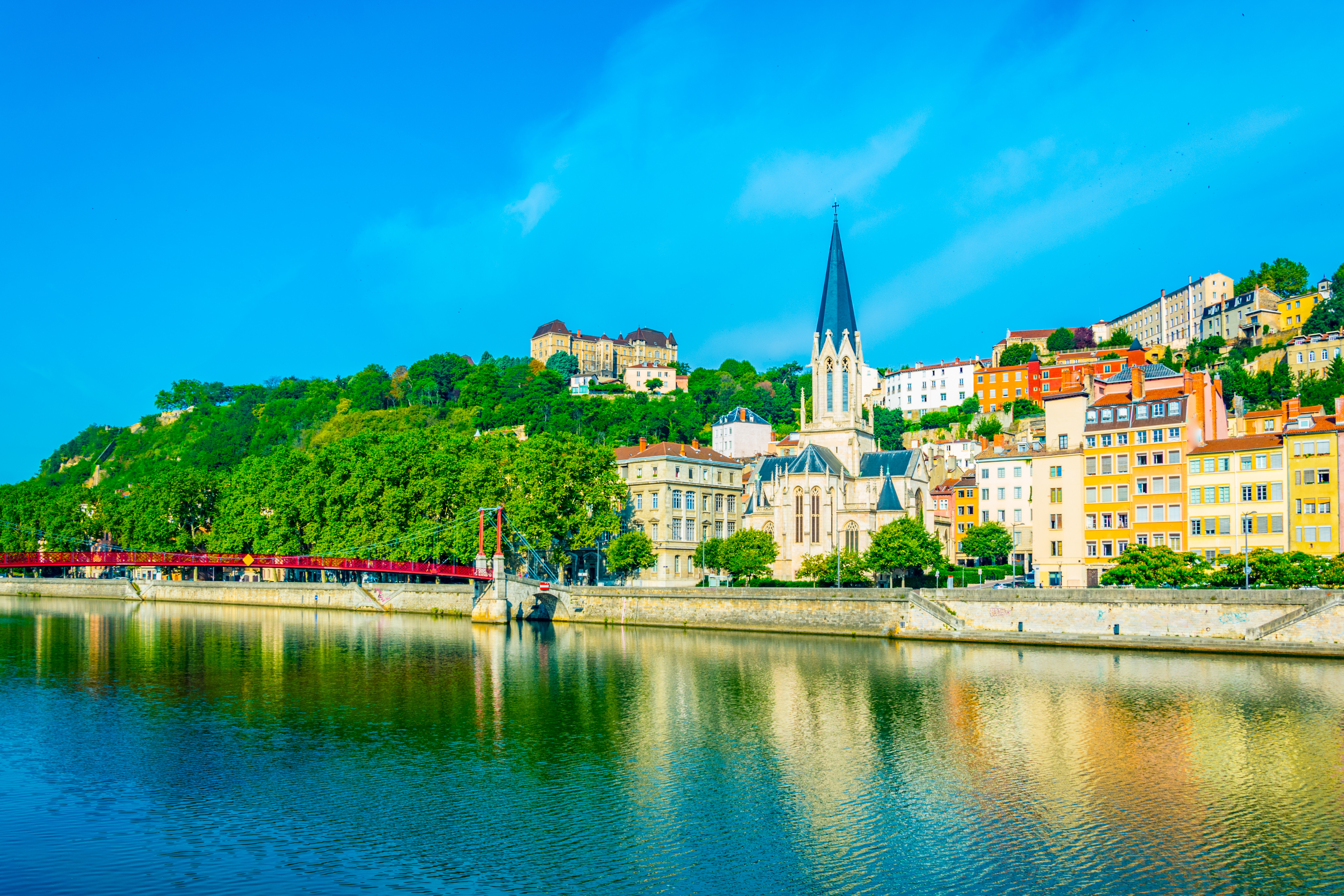
From its source west of the Vosges Mountains, France’s Saône River flows past Burgundy’s Côte-d’Or and the finest vineyards of Beaujolais before it joins the Rhône River in the city of Lyon. Read on to discover five fast facts about the Saône River!

#1—It’s Burgundy’s River: The Saône River flows—generally to the southeast—for just over 294 miles (473 km) across eastern France. For much of its length, it helps to define the wine region of Burgundy and Beaujolais (located along or west of its western shores). Many of the grands crus of the Côte-d’Or are located a mere 10 miles/16 km to the west of the Saône, and once the river makes its way a bit further south, it forms a small part of the eastern border of the Mâcon AOC before heading further south toward Beaujolais. The river then flows past the northern and central portions of the Beaujolais AOC (about 6 miles/9 km from the eastern edge of the vineyards) before it takes a sharp turn to the east just past the town of Villefranche-sur-Saône on its journey to the Rhône.
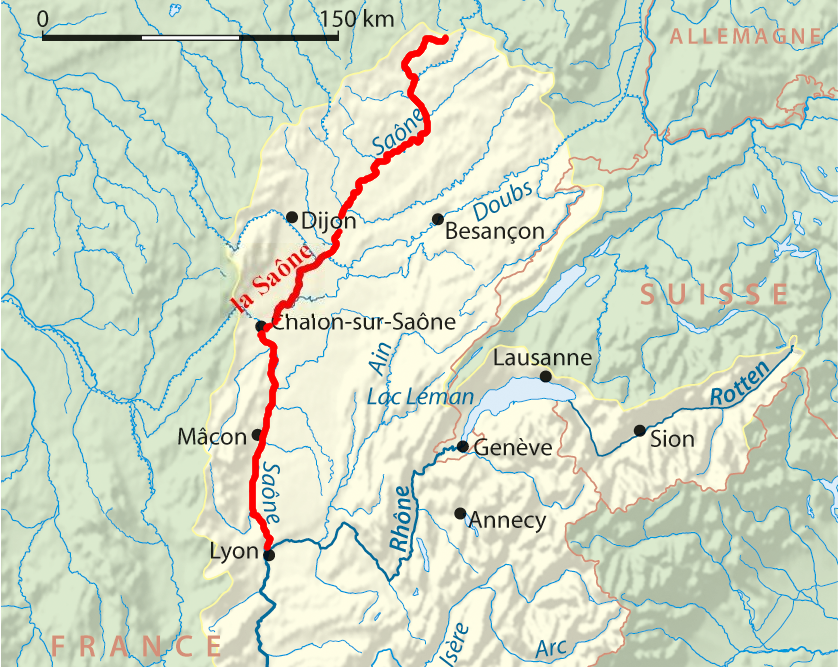
Map of the Saône River by PRA via Wikimedia Commons

#2—It all begins in the Faucilles: The source of the Saône River can be found within the rolling hills of the Monts Faucilles (Faucilles Mountains).  The Faucilles Mountains mark the boundary between the Lorraine Plateau (to the west) and the Vosges Mountains (to the east). The precise source of the river— a spring located at the foot of a cliff (elevation: 518 feet/158 m)—may be found in the Grand Est commune of Vioménil.

 #3—It’s Petite and then it’s Grande: The Saône meanders as a slow, winding river—known as the Petite  Saône through the Faucilles Mountains and across the Lorraine Plateau for about 93 miles/150 km until it is joined by the Doubs River in the town of Verdun-sur-le-Doubs. At the point of its confluence, the Doubs is a much more impressive waterway than the Saône (and some would argue that the Saône joins the Doubs instead of the other way around). From Verdun-sur-le-Doubs to its confluence with the Rhône—where it is known as the Grande Saône—river is a high-capacity waterway crisscrossed with canals leading to the vineyards of Burgundy as well as many other large rivers—including the Loire, the Marne, and the Rhine.
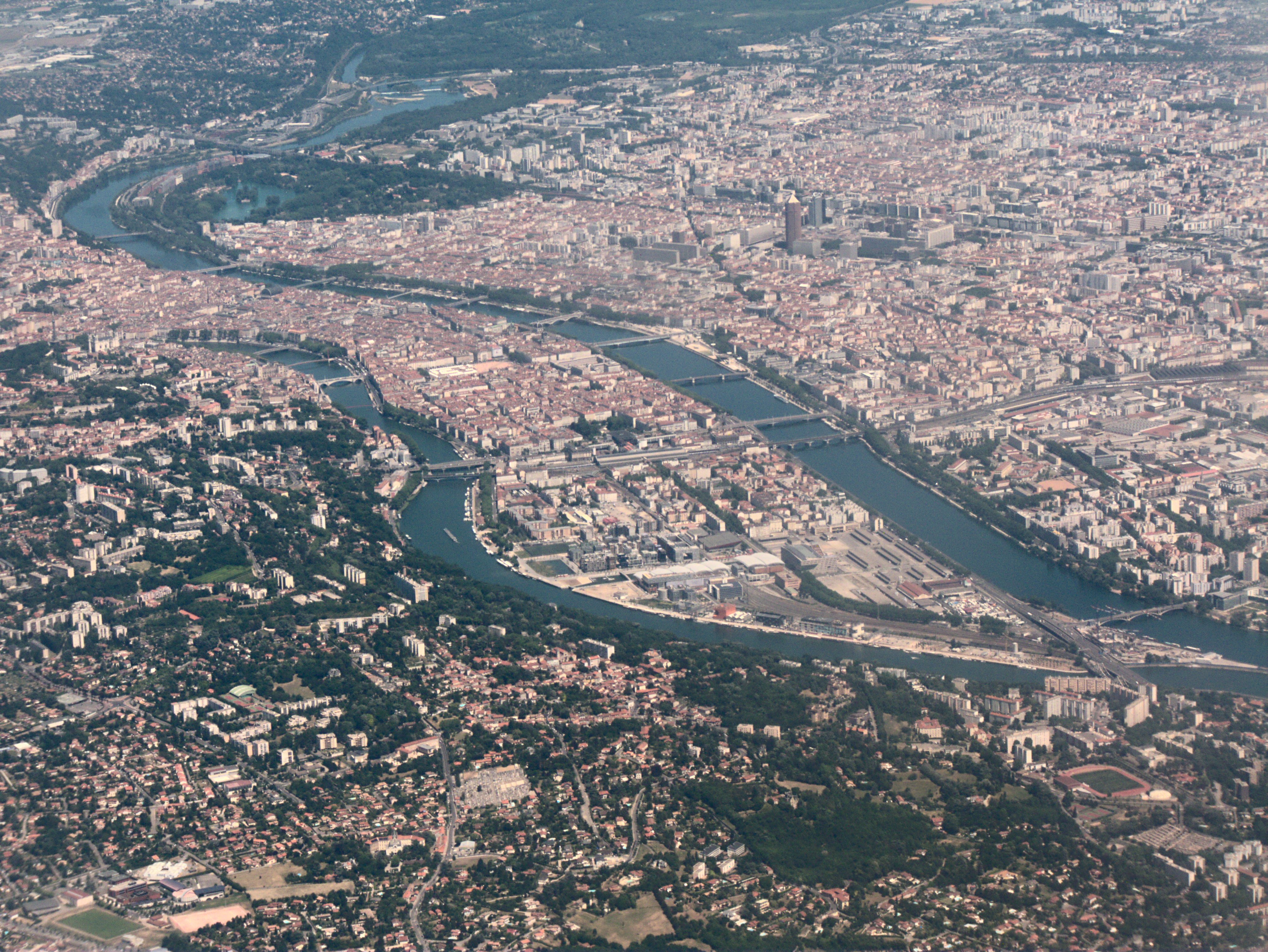
Photo of the Presqu’île by David Monniaux with Wikimedia Commons

#4—There is “almost an island” near the end: Located with the 1st and 2nd arrondissements of the city of Lyon, the Presqu’île is a peninsula extending from Croix-Rousse hill in the north and surrounded by the Rhône and Saône Rivers—precisely at the point where they join. The word presqu’île translates literally to “almost an island,” an apt way to describe the prestigious area, recognized as a UNESCO World Heritage site and home to Lyon’s City Hall (the  Hôtel de Ville) and the 14th-Century Church of St. Nizier in addition to a plethora of restaurants, cafés, and department stores.

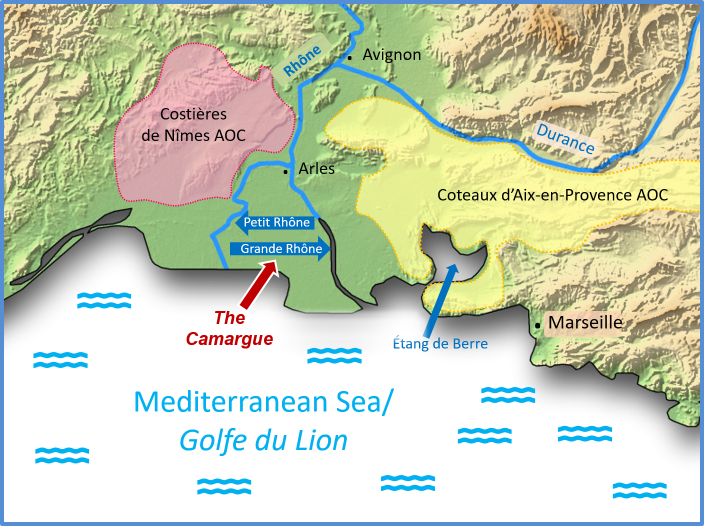
#5—It feeds the Rhône: In the city of Lyon, the Saône flows into the Rhône as a right-bank (and the Rhône’s largest) tributary. From Lyon, the Rhône flows south through a valley (well-known to wine lovers as the Vallée du Rhône/Rhône Valley) tucked between the Alps and The Massif Central. Just past Arles, it breaks into two arms and forms the Camargue Delta on its way to the Mediterranean Sea.

References/for more information:

The Bubbly Professor is “Miss Jane” Nickles of San Marcos, Texas… missjane@prodigy.net

Confusion Corner: the Montepulcianos

.

Welcome to confusion corner, Montepulciano! Well-deserved! To wit: Montepulciano is a place (a town in Tuscany), a grape (a red variety), and the name of several wines. Let’s see if we can de-muddle some of the Montepulciano mayhem by taking them one by one. Before we get started, you need to know this (and this is going to hurt): Montepulciano the grape is NOT grown in Montepulciano the town. 

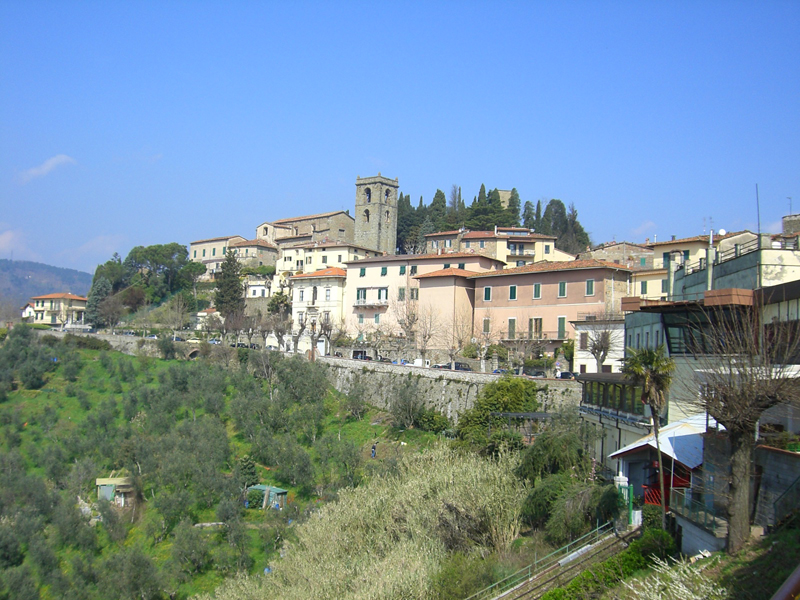
Montepulciano—the town: Montepulciano is an ancient hilltop town located in Tuscany—about 43 miles (70 km) southeast of Siena. The town—once a Roman fort charged with guarding the main roads of the area—sits on a 1,985-foot- (605-m-) high limestone ridge. The town’s historic center is home of a range of Renaissance palaces (Palazzo Comunale, Palazzo Tarugi), a delightful town square (Piazza Grande), and more than one imposing place of worship (don’t miss the Santa Maria Assunta Cathedral). Beyond Montepulciano’s medieval walls lie rolling hills, vineyards, and cypress trees as far as the eye can see. Such towns are what Tuscan dreams are made of.

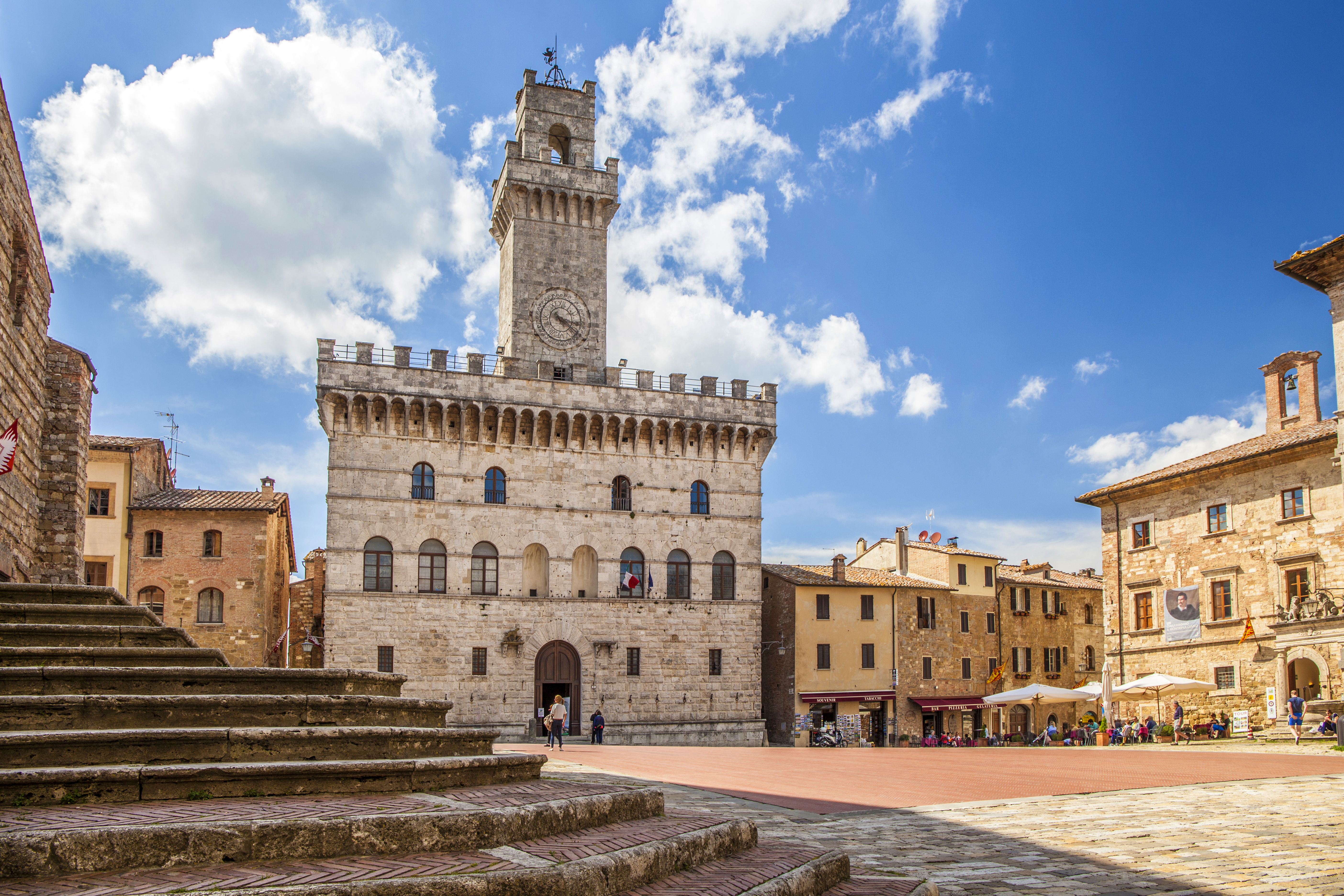
The Palazzo Comunale (Town Hall) in Piazza Grande, Montepulciano

The wines of Montepulciano (the town): Those vineyards surrounding the town of Montepulciano are mainly planted to Sangiovese—although here it goes by the name of Prugnolo Gentile. The most famous wine of the area—Vino Nobile de Montepulciano DOCG—is produced using a minimum of 70% Prugnolo Gentile. In addition, it often contains a smattering of other red grapes and maybe a dash or two (maximum 5%) Malvasia Bianca Lunga or other white grapes. Vino Nobile de Montepulciano DOCG requires a minimum of one year in oak and a total of two years of aging (measured from January 1 of the year following the harvest) before its release.

Rosso di Montepulciano DOC—a more modern, fruit-forward red wine of the region—is produced using the same grape varieties but only requires a few months of aging. With some exceptions, Rosso di Montepulciano DOC may be released on March 1 of the year following harvest. In April of 2020, the consorzio for Rosso di Montepulciano DOC sought to assuage some of the Montepulciano madness by requiring that the wine bear the term Toscana on the label along with the name of the wine.

Montepulciano: the grape

Montepulciano—the grape: The grape variety known as Montepulciano is most likely native to the area around Abruzzo. Montepulciano—widely planted across central Italy—is a prolific grape known to produce red wines of deep color and ample tannin. After Sangiovese, it is the second-most-widely planted red grape in Italy and as such, it makes sense that Montepulciano (the grape) is often used as a blending partner for Italy’s superstar Sangiovese.

On its own, Montepulciano can be made into medium-bodied, easy-drinking pizza wines with cherry-berry aromas and a good zing of acidity. However—particularly when grown on old vines and vinified with a touch of oak—Montepulciano can produce a serious, age-worthy wine redolent of red plum, black fruit (boysenberry, blackberry), herbs, and tar (sounds weird, but Syrah and Nebbiolo can show tar aromas as well).

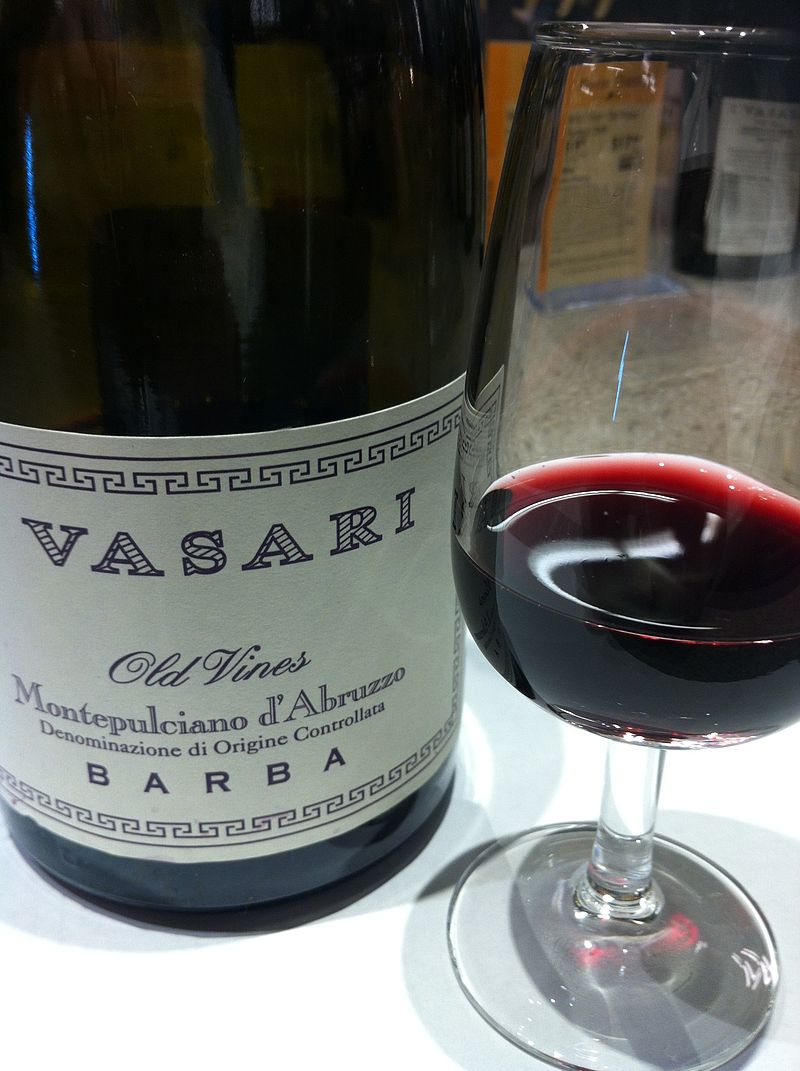
Photo of Montepulciano d’Abruzzo by Agne27 via Wikimedia Commons

The wines of Montepulciano (the grape): The Montepulciano grape variety is used (in varying amounts) in over 50 DOC/DOCG wines of Italy. Offida Rosso DOCG, Rosso Conero DOC, and Terre Tollesi DOCG are among those that best showcase this grape.

However, the confusion corner sets in with the wines named for the grape itself: Montepulciano d’Abruzzo DOC and Montepulciano d’Abruzzo Colline Teramane DOCG. Montepulciano d’Abruzzo DOC, produced in a large swath of the Abruzzo province stretching along and inland from the Adriatic Sea, is one of Italy’s most widely produced and popular wines. Beloved for its fruity flavors, soft tannins, and delightfully inexpensive price point, it is an easy wine to love.

Montepulciano d’Abruzzo Colline Teramane DOCG—made only in the hilly, northwest section of the larger DOC area—is made with a minimum of 90% Montepulciano grapes; the remaining 10% may be Sangiovese (or more Montepulciano). The wine required a minimum of 2 years of aging (from November 1 of the harvest year). This two-year aging regiment must include at least one year in oak or chestnut and at least six months of bottle aging.  Montepulciano d’Abruzzo Colline Teramane DOCG is a uniquely opulent wine with intense flavors of fruit (dark cherries, red plum), spice, and smoke.

TLDR: Montepulciano is a town in Tuscany; the wine known as Vino Nobile di Montepulciano DOCG is made from Prugnolo Gentile (Sangiovese). Montepulciano—the red grape—is a specialty of central Italy and made into a wide range of wines; Montepulciano d’Abruzzo DOC is among the best known.

Any questions?

References/for more information:

The Bubbly Professor is “Miss Jane” Nickles of San Marcos, Texas… missjane@prodigy.net
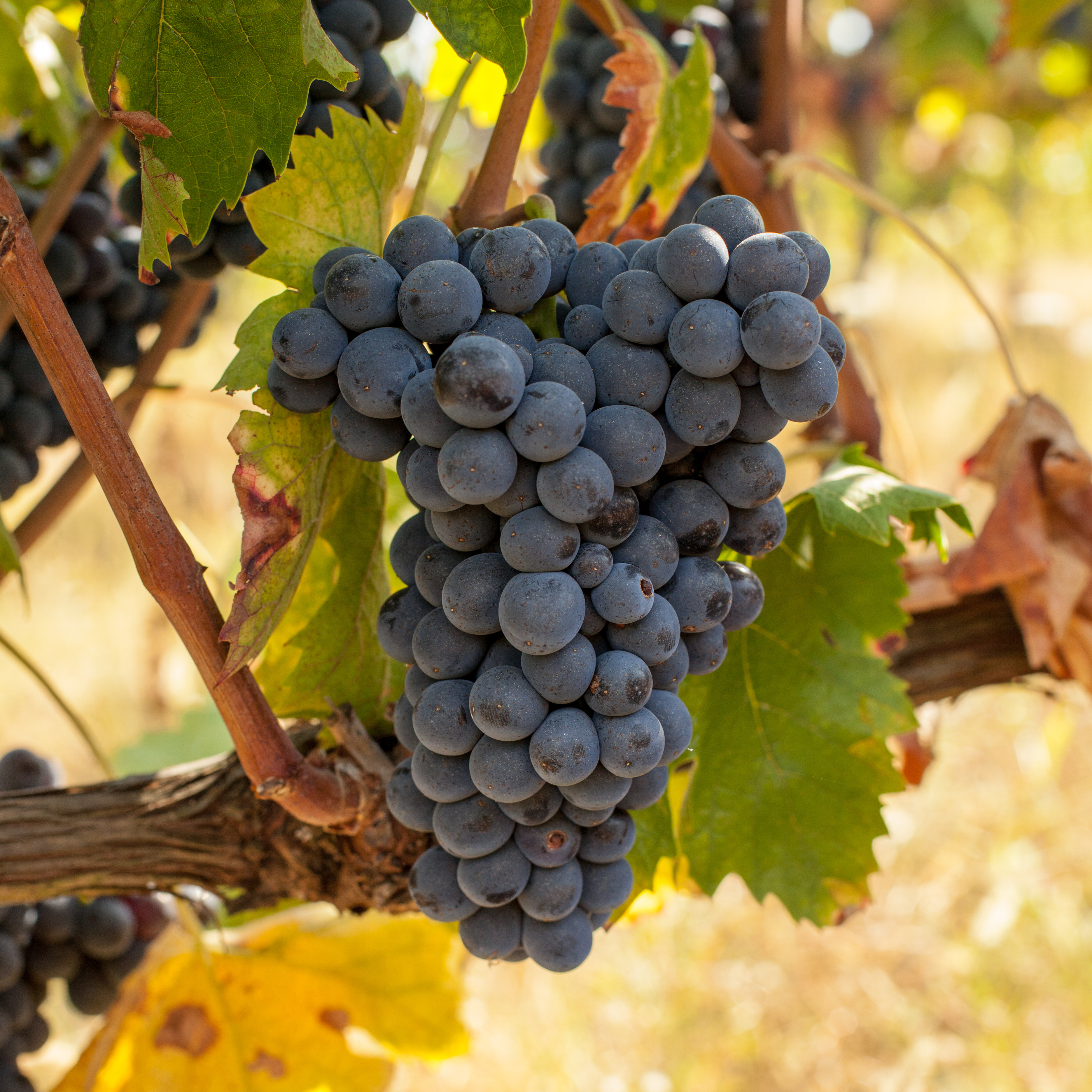
Five Fast Facts about Budbreak

.

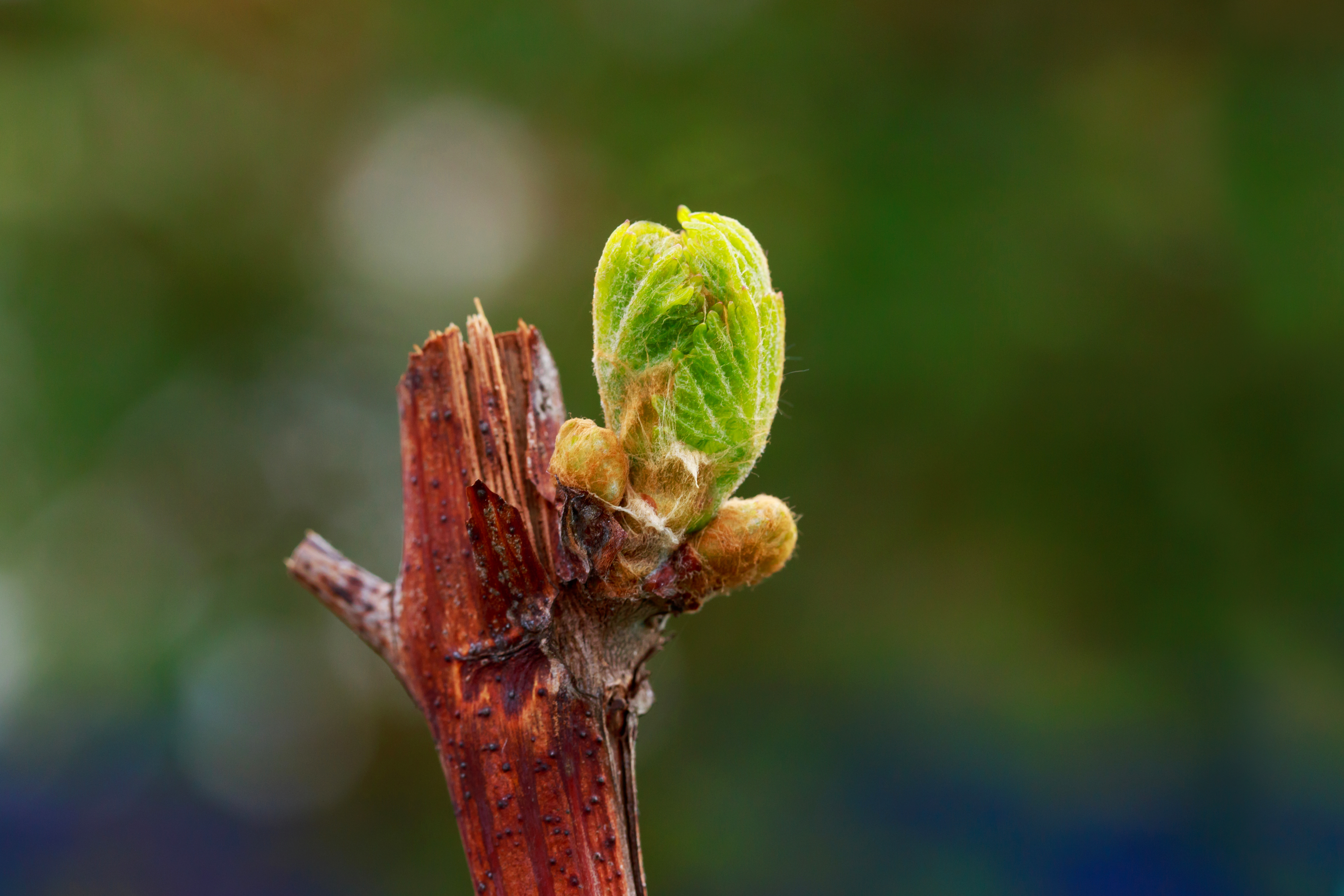
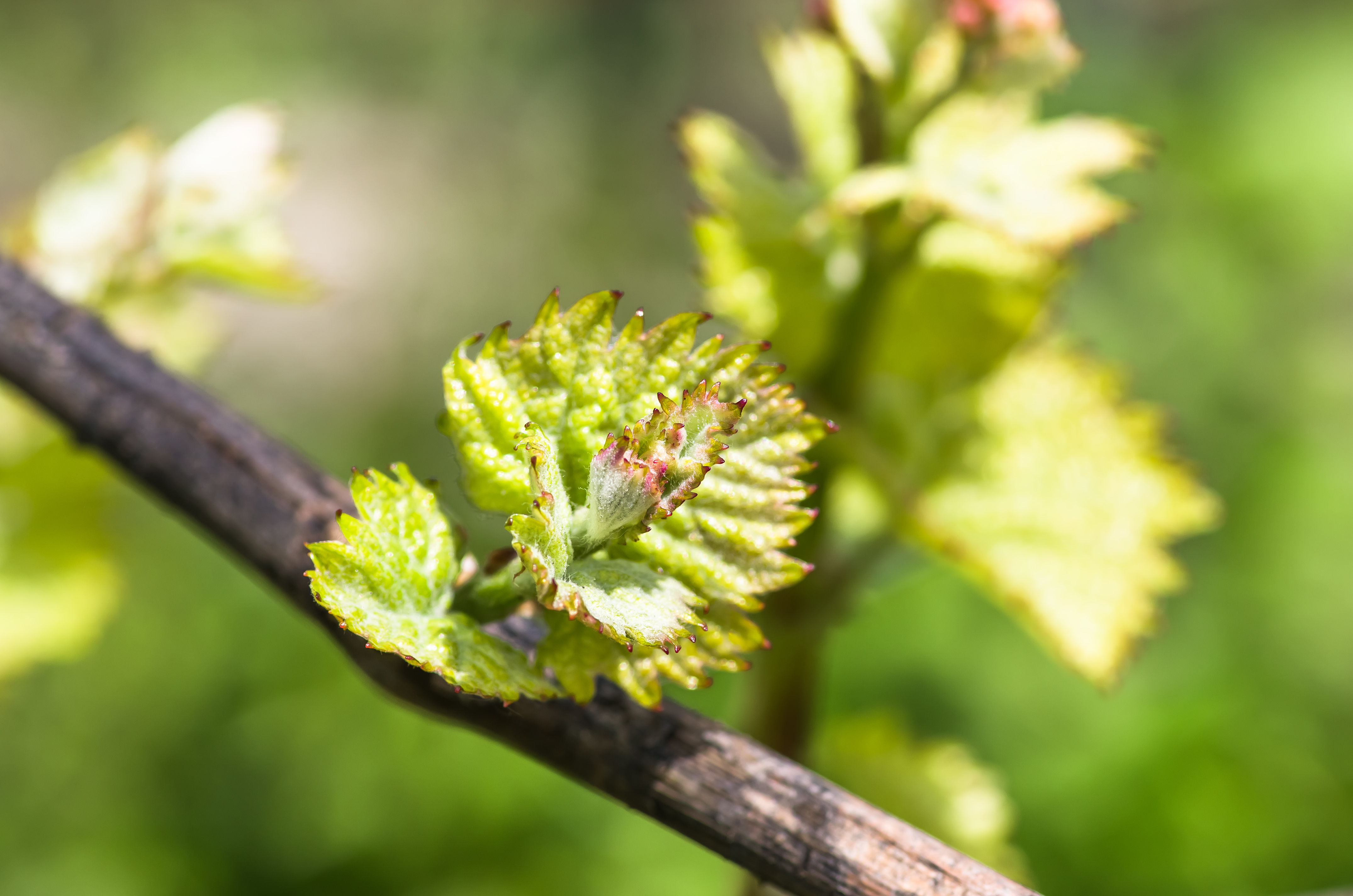
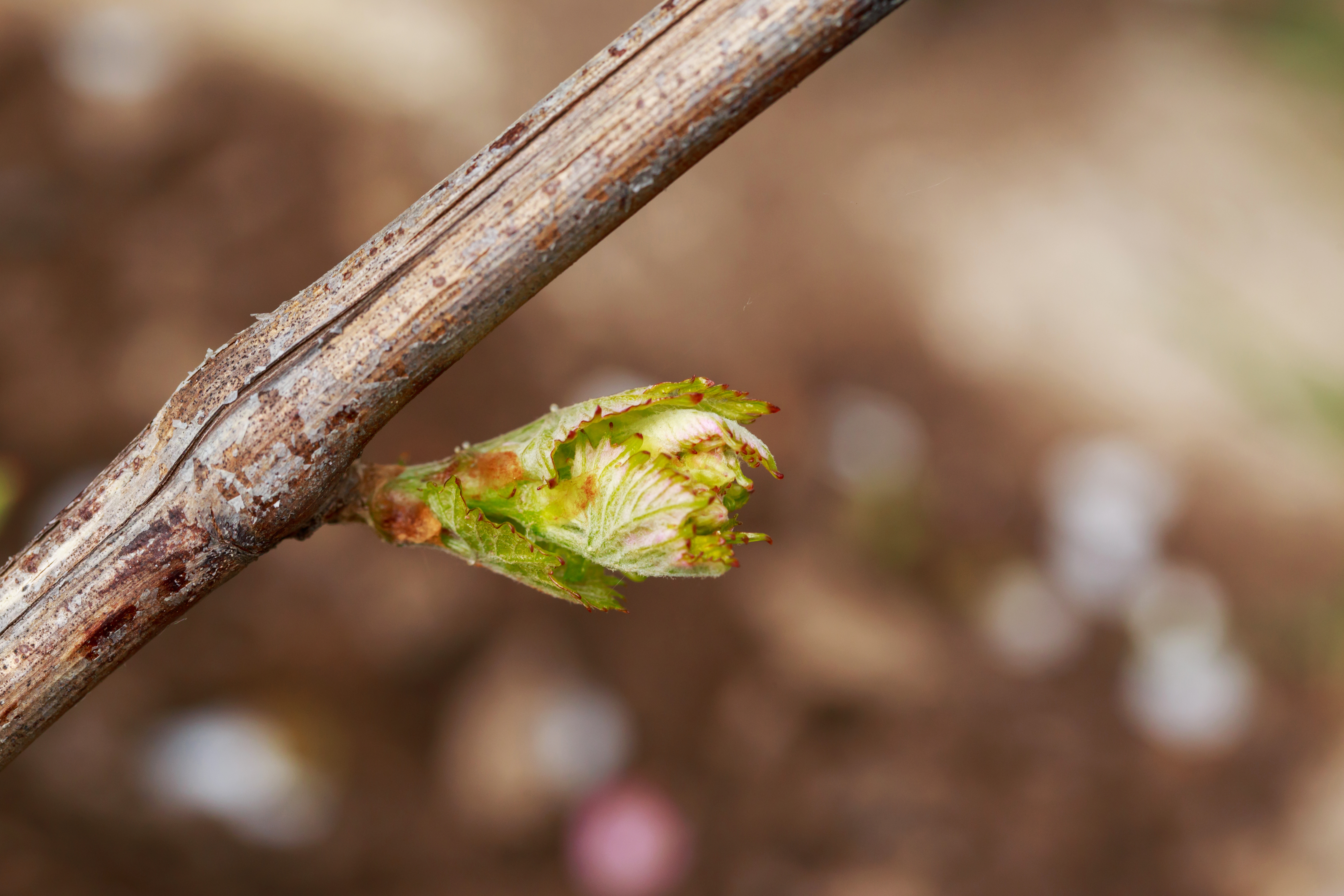
Despite the craziness of the world around us, the natural cycle of life continues. One of the most fascinating to witness—for students of wine—is the life cycle of the vineyard. For those of us in the Northern Hemisphere, we are witnessing the blooming of spring—and along with it—the breaking of buds in the vineyard.

In homage to this annual miracle, here are five fast (fascinating) facts about budbreak in the vineyard.

#1: In a typical year in the Northern Hemisphere, budbreak will begin in mid-March. In years of oddball weather, it may begin to occur as early as mid-February or as late as mid-April. In the Southern Hemisphere, the process typically begins in mid-September, but can be as early as August or as late as October.

.

#2: Within a single vine, those buds that are furthest away from the trunk will break first; in some cases, this may occur several days before those located closer to the trunk. This is particularly apparent when canes are left upright; in such cases the buds furthest from the trunk (the more distal buds) will be observed to burst several days before those closer to the trunk (basal buds). This phenomenon, known as apical dominance, can be avoided by bending or cracking the cane.

#3: The most direct correlation between mother nature and budbreak is the cumulative effect of the warming air temperature once it hits an average of 10°C/50°F. This temperature is sometimes referred to as the “growth threshold” and will signal the nascent buds to shed their fuzzy exterior and break free. Soil temperature may also be a contributing factor, so a wet-and-cold late winter (resulting in wet soils that retain the cold temperatures) can slide bud break back a few days or weeks. (According to the website of Penn State Extension/Wine and Grapes there is conflicting information on whether or not soil temperature affects the timing of bud break. In some studies, Cabernet Sauvignon vines show a correlation between the date of bud break and rising soil temperatures. Alternatively, some studies show no correlation between soil temperatures and the timing of bud break in Syrah.) Other factors that influence the timing of budbreak include photoperiod (day length) and chemical (hormonal) plant growth regulators that help to maintain the plant’s period of dormancy even in the face of mid-winter warm spells.

.

#4: While many factors contribute to the timing of budbreak in a given vineyard in a given year, some varieties are known for their tendency towards early budbreak. Likewise, some grapes tend to be late breakers. Here is a list of some of the better-known varieties, arranged by their tendencies regarding bud-break and ripening:

  • Early bud break/early ripening: Chardonnay, Pinot Noir, Merlot
  • Early bud break/mid-to-late ripening: Chenin Blanc, Grenache, Viognier
  • Late bud break/early ripening: Sauvignon Blanc, Syrah
  • Late bud break/mid-to-late ripening: Riesling, Cabernet Sauvignon

#5: Fun with fruit trivia: Grapevines need a slightly higher base (air) temperature than is required to induce bud break in many other fruits. Fruit trees such as apple, peach, cherry, and apricot tend to break bud when the average air temperature reaches 39° to 41 °F (3.8° to 5°C).

The most important aspect of bud break, at least in my opinion, is that is represents the hope for a successful year, to be followed by flowering, fruit set, veraison, ripening, harvest, and (several months or several years later) more wine for all of us lucky humans. Bring on the buds!

References/for more information:

The Bubbly Professor is “Miss Jane” Nickles of San Marcos, Texas… missjane@prodigy.net
Wine Geo: What (exactly) is a Cape?

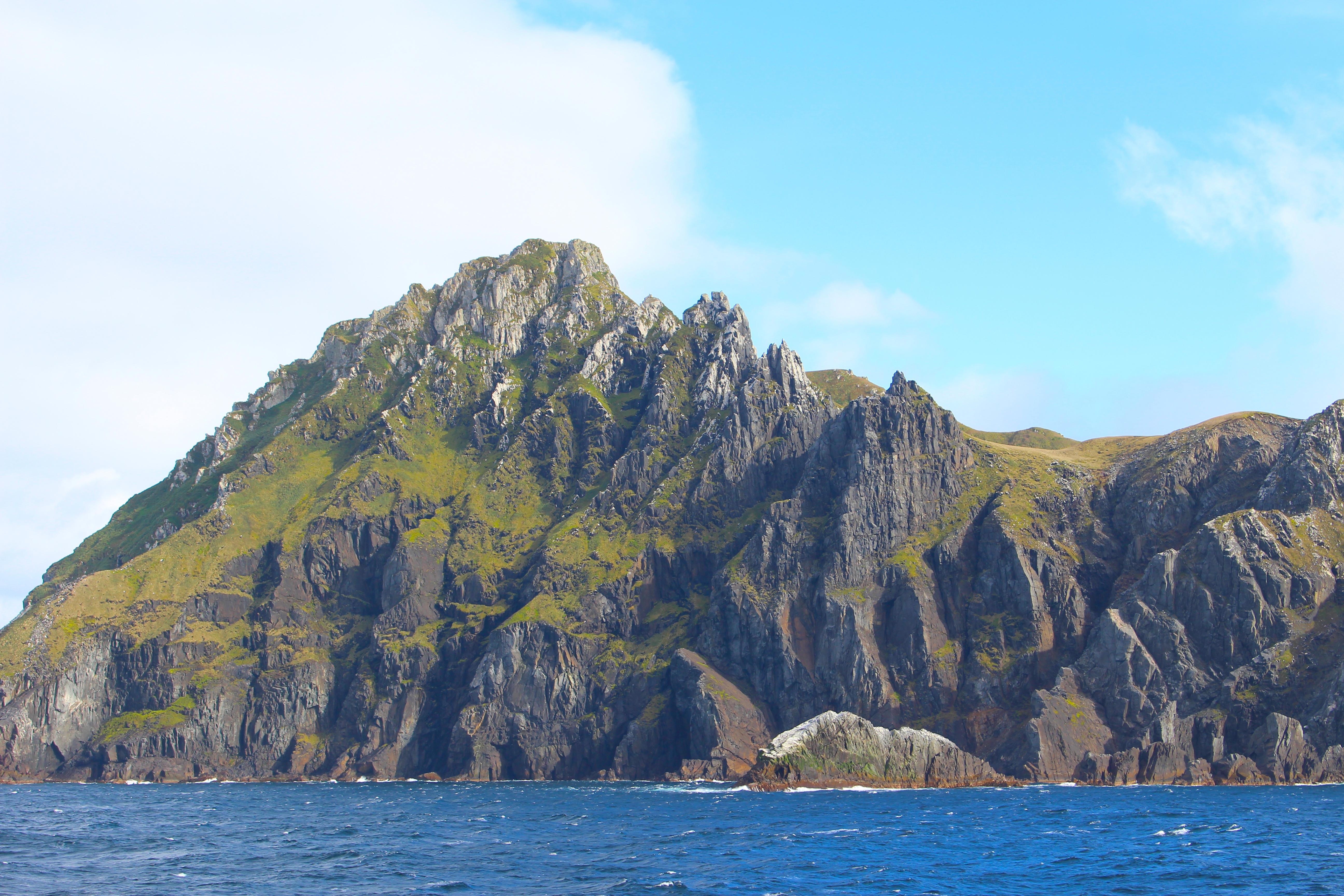
The impressive cliffs of Cape Horn

Cape Canaveral, Cabo San Lucas, Cape Cod…we’ve heard of them all, we’ve visited some of them…but do we really know what a cape is?

Geographically speaking, a cape is a narrow point of land—usually quite high and rugged—that extends into a body of water. Capes can be part of a large land mass (such as Cape Finisterre in Galicia and the Cape of Good Hope in South Africa ) or part of an island (such as Cape Hatteras in North Carolina).

Technically, a cape is a peninsula (although geography geeks may argue that a cape is smaller). Other terms that may be used to describe a cape include headland (a cape is often defined as a large headland), bluff (geographers will say a bluff is typically rounded via erosion, whereas a cape is jagged), or promontory (a more general term that also includes raised lands surrounded by lowlands).

All is well at Cape Foulwind

Terroir-derived benefits of a cape—a rugged spot perched high above the surrounding waters—are likely to include the following: include typically cool, maritime climate; low risk of frost; moderate elevation and slope; aspect; and well-drained (often rocky and infertile) soil.

The concept of the cape is woven into the language of wine. South Africa, for instance, contains at least six wine regions that are so designated, including the Western Cape, Cape South Coast, Cape Agulhas, Cape Town, Eastern Cape, and Northern Cape—all official geographical indications for South African Wine

Here are a few more capes that should be well-known to wine lovers:  

  • The Cape May Peninsula AVA: located in southern New Jersey and to date, the only AVA with the word “cape” in the name.
  • Cape Kidnappers: best story ever and part of New Zealand’s Hawks Bay GI.
  • Cape of Good Hope: part of South Africa’s Cape Town GI, often thought to be the southernmost point in Africa—but that award goes to Cape Agulhas, located on the other side of False Bay.
  • Cabo da Roca: the western-most point of continental Europe and part of Portugal’s Colares DOC.
  • Cape Naturaliste, Cape Leeuwin, Cape Hamelin, Cape Freychinet, and Cape Mentelle: all are located within Western Australia’s Margaret River GI, several will sound familiar for their namesake wine estates.

View from the Cape of Good Hope

Beyond the world of wine, famous capes include the following:

  • Cabo San Lucas: Baja California’s famous beach resort area
  • Cape Fear: located off the coast of North Carolina’s Bald Head Island, also a scary movie.
  • Cape Canaveral: on Florida’s Atlantic coast, part of the Space Coast, famous site for launching spacecraft.
  • Cape Cod: famous beach town located off the southeast coast of Massachusetts, technically a series of glacier-formed islands that have experienced significant erosion.
  • Cape Foulwind: located on the west coast of New Zealand’s South Island, and so named after Captain James Cook’s ship was blown far off course from this point. It had previously been known as Rocky Point.
  • Cape Horn: the often-frozen southern edge of Chile’s Tierra del Fuego archipelago, close to the southernmost point of South America, intrepid sailors can slip through Drake’s Passage and brag about rounding the horn.
  • Cape Finisterre: the western-most point on the Camino de Santiago; during Roman times the land was literally believed to be the edge of the known world; the term derives from the Latin finis terrae (end of the earth).

References/for more information:

The Bubbly Professor is “Miss Jane” Nickles of San Marcos, Texas… missjane@prodigy.net
Confusion Corner: Côte des Bar, Côtes de Barr, Clos de la Barre

In the world of French wine, there are several different places that go by the name Bar (or Barr or Barre).  They sound similar, they look alike (almost) on a wine label, but they are not at all the same. At least two are officially-designated appellations of origin; some are descriptive terms—well-accepted and widely used, but not granted any type of protected status under the law. Let’s take a look at three of these, spread out over Champagne, Burgundy, and Alsace—and collectively representing the three of the iconic styles of wine: red, white, and sparkling.  Let’s dig a bit deeper in the Côte des Bar in Champagne, the Côtes de Barr in Alsace, and the Clos de la Barre in Volnay. Do you know which is which?

Alsace–Côtes de Barr AOC: The Côtes de Barr is one of the 13 official sub-appellations—dénominations géographiques complémentaires—of the Alsace AOC. Some of the Alsace sub-appellations are fairly well known—serious students of wine will no doubt recognize Klevener de Heiligenstein, Ottrott, and Saint-Hippolyte—however, the Côtes de Barr remains somewhat obscure.

Located just south of the town of Heiligenstein and covering the entirety of the commune of Barr in the Bas-Rhin, the Côtes de Barr is sub-appellation is approved for white wines based on the Sylvaner grape variety only. Domaine Leipp-Leininger is a leading producer. Barr—despite its small population of 7,000—is considered one of the leading wine towns of the Bas-Rhin and is worth a tourist stop for its centuries-old half-timber houses, the Place de l’Hôtel de Ville (town square), Musée de la Folie Marco (museum housed in a 17th-century Alsatian villa), and the Chapel of Saint Martin.

In an eternal nod to the confusion of Confusion Corner, the commune of Barr is also home to the Alsace Grand Cru Kirchberg de Barr AOC. Named for the steep-sided slopes leading up to the Chapel of Saint Martin (the name Kirchberg is derived from hill of the church), the vineyards are largely planted to Gewurztraminer; although Riesling, Muscat, Pinot Gris, and Pinot Noir are represented as well. True wine nerds will recognize Kirchberg de Barr as one of the two Alsace Grands Crus recently approved for the production of Pinot Noir (red wine) under the Grand Cru label.

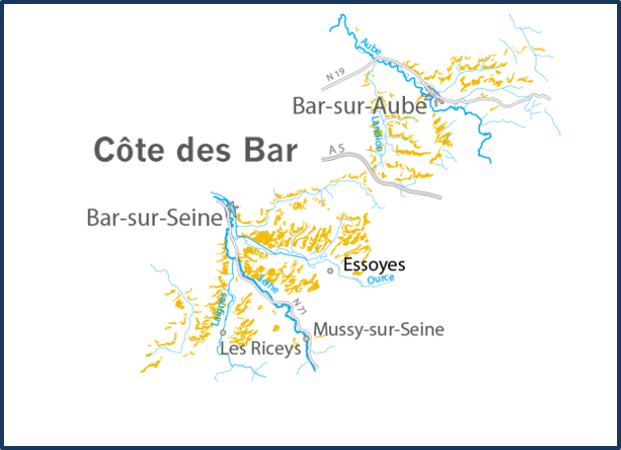
Map of the Côte des Bar via the Union des Maisons de Champagne

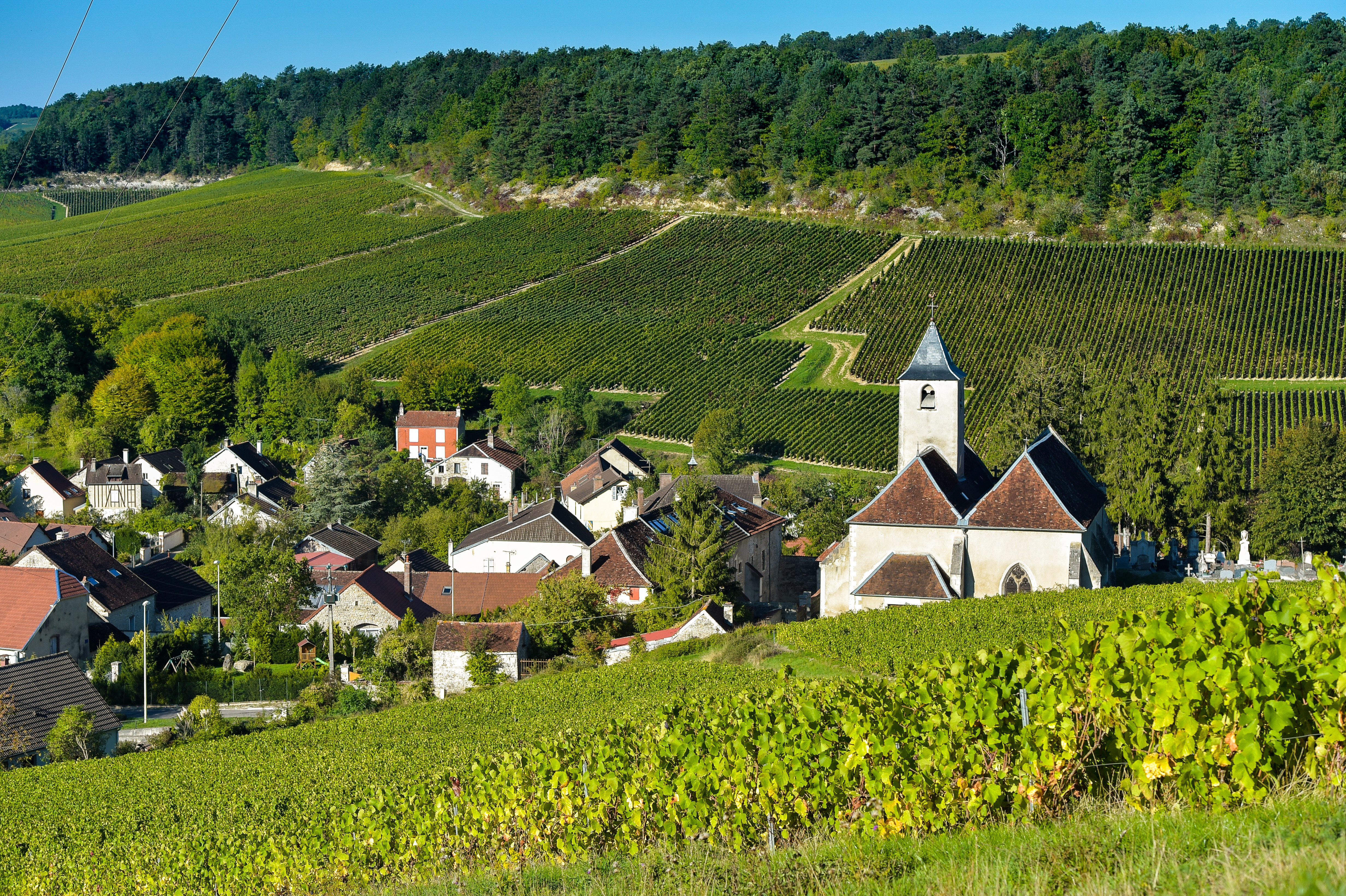
The Côte des Bar: While not an official sub-region, the Côte des Bar is one of the five informally grouped districts of Champagne and it is described on the appellation’s cahier des charges. This area—often referred to as the Aube, based on the area’s political department—is located well to the south of the other, more centralized vineyard areas of Champagne.

The Côte des Bar is named for two towns which are, in turn, named after the two main rivers—the Aube and the Seine—that run through the area. Bar-sur-Aube is located on the eastern side of the area, while Bar-sur-Seine is situated on the west. In the case of both of these towns, the name Bar is derived from an old Gallic term meaning summit or height.

The area is known for its band of Kimmeridgian soil (also seen in Chablis) as well as some outcroppings of Portlandian limestone. While all seven of the grapes of Champagne are grown in the Côte des Bar, a great majority—as much as 86% of the total vineyard acreage—is planted to Pinot Noir.

Volnay Clos de la Barre Premier Cru AOC: Clos de la Barre—barre being an Old French term meaning fence—is one of 29 designated Premier Cru vineyards located within the Volnay AOC. The Volnay AOC—including all 29 Premiers Crus—is only approved for red wine. The Clos de la Barre Premier Cru is a tiny appellation—totaling about 1.3 hectares/3.5 acres—situated just to the east of the village of Volnay. The vineyard is owned by one family and planted exclusively to Pinot Noir. These days, all the grapes are sold to Maison Louis Jadot, making them the sole producer of Volnay Clos de la Barre Premier Cru wines.

Note: for this article, I’ve only included mentions of the place-name Bar (or Barr or Barre) that are listed on an appellation’s Cahier des Charges. If there are more to be found, let us know!

References/for more information:

The Bubbly Professor is “Miss Jane” Nickles of San Marcos, Texas… missjane@prodigy.net
The Bubbly Professor on Tim Gaiser’s Message in the Bottle

Photo of Tim Gaiser, MS by Kelly McCarthy

I recently read a book on wine tasting. As a sworn wine afficionado, it’s probably the 100th wine book I’ve read. However, this one—Message in the Bottle: A Guide to Tasting Wine by Tim Gaiser, MS—was special.

First of all, I’ve known Tim for about 20 years and have—on many occasions—had the pleasure of being in the audience as he gave a presentation on the intricacies of wine tasting. Tim has contributed much to subject of tasting and has given the crowded field of wine expertise a truly original perspective. Tim Gaiser is—in my humble opinion—one of the best wine educators in the world.

I am not in any way qualified to review books. I don’t know anything about writing styles, theme development, or the needs of the target audience. However, I can tell you that I learned a lot from this book, and that the book simplified some concepts—such as the subjective vs. the objective in wine tasting—that truly needed simplifying. (Before you think that means that this is an easy book, please note that simplifying something is extremely difficult. In the words of Steve Jobs, “Simple can be harder than complex: You have to work hard to get your thinking clean to make it simple. But it’s worth it in the end because once you get there, you can move mountains.”)

Before I go too far down that rabbit hole, here are a few things I learned from Tim Gaiser’s book:

We may never solve for the objective vs. the subjective in wine tasting, but Tim’s book has a notable take on the matter: Some things are objective and measurable (sediment, clarity, alcohol by volume); some things are subjective (aromatic intensity, flavors, balance)—and never the twain shall meet. However, Tim points out that even truly subjective concepts can be described and discussed by defining the extremes (nothing vs a large amount) and working from there. For instance, bitterness in wine can be non-existent (like a bowl of vanilla pudding), or extreme (like a double shot of espresso). Describing a specific wine as somewhere on that continuum is a way of combining the objective with the subjective (and might just limit the number of fist-fights to break out at tonight’s Valpolicella tasting).

There’s a tech sheet manifesto: I use wine tech sheets all the time and suggest their use to all of my students. Beginners will often ask what a tech sheet is, and I stumble all over an explanation which turns out to be something like “winemaker’s notes that may or may not tell you what you want to know.” While this sad fact is unlikely to change anytime soon, Tim’s book contains a meticulous wish list of what a tech sheet would, could, and should be. It includes basics such as grape variety, sweetness, pH, and level of alcohol (which are all-too-often missing) and well as more telling factoids such as vineyard elevation, ripeness levels at harvest, and cases produced. It’s a well-thought-out checklist, and if I thought it would work, I’d start a Change(dot)org petition to bring Tim’s Tech Sheet Manifesto to life.

Using associative rehearsal, you can improve your tasting skills without wine: Using a form of active recall to describe a specific type or style of wine (without the wine in front of you) is a great study technique; it’s been around a while and many wine educators refer to this practice as writing a dry tasting note. Tim has several meaty pages of advice for associative rehearsal/dry tasting notes, which—if followed—promise to help the student connect with and cement their knowledge of specific wines from tastings past. If you—like most wine students—have amassed a mountain of tasting notes and have a hard time remembering which wine is which, this advice is for you.

Impact compounds impact more than a wine’s aroma: I appreciate the concept of impact compounds, and love to wax poetic about the rosy notes of terpenes, the black pepperiness derived of rotundone, and the simple explanation as to why your wine may smell of gasoline (TDN).  Tim’s book explains the origin of impact compounds—which might be grape chemistry, the vineyard itself,  winemaking magic, or who knows what else. More importantly, what I gained from this section is the knowledge that these tricky little chemical groupings can be a key tool in detecting and recognizing specific varietals or regions-of-origin. In other words, if you want to develop your wine recognition/blind tasting skills, impact compounds are your new best friends.

I recommend this book to anyone who is interested in refining their wine tasting skills or exploring the philosophy of wine. There’s a lot here for advanced tasters, but plenty of space is dedicated developing the beginner’s palate as well.

Message in the Bottle: A Guide to Tasting Wine by Tim Gaiser, MS (Newworlding Publishing, 2022) is available on Amazon.com. You can contact Tim via his well-read blog at timgaiser.com.

The Bubbly Professor is “Miss Jane” Nickles of Austin, Texas… missjane@prodigy.net