Tales of the Vine: The King with the Grizzly Beard

Behind every bottle, there’s a story…

Born in 742 and rising to power as the Holy Roman Emperor and ruler of much of the Western World, it was Emperor Charlemagne who commanded the planting of the Pinot Noir vines that produce the excellent red Burgundy of Le Corton.  It is well-known that Emperor Charlemagne adored the precious red wine of Le Corton, and drank some every day.

However, as the years past and the king became an older man, his hand was no longer as steady as it once was.  From time to time, while enjoying his precious red Burgundy, he would spill some wine onto his flowing white beard.  The resulting red stains annoyed his wife to such an extent that she demanded that he stop drinking wine.

Emperor Charlemagne was a legendary lover of the company of women, but was determined nonetheless to not give in to his wife’s demands.  Charlemagne craftily decided to become a white wine aficionado in order to be able to drink to his heart’s content without compromising his regal appearance or arousing the wrath of his last and reportedly favorite wife.

Thus, Emperor Charlemagne demanded that part of the hill of Le Corton be replanted with white grapes, and the famous white wine vineyard now known as Corton-Charlemagne came to be.  With white wine in hand, Charlemagne was able to drink his beloved wine again, shaky hands, grizzly white beard, and all.


Tales of the Vine: Est! Est!! Est!!!

Behind every bottle, there’s a story…

Legend has it that in 1107, under the order of The Holy Roman Emperor Henry V, a German Bishop named Johan Fugger was sent to Rome. He was journeying there to visit the Pope in hope of being elevated to Cardinal.

Fugger was a rotund man known for being very fond of food, wine, and the other good things in life.  So fond of good wine was he, that on his travels he customarily sent his faithful servant, Martin, one day ahead of the rest of his group in order to seek out the best local wine in the towns along the way. When he found an inn serving good wine he was to mark the door with the word “Est”, being short for the Latin Phrase “Vinum Est Bonum” – the wine is good.

When he got to the town of Montefiascone in northern Lazio, Martin was so impressed by the quality of the wines being served at one tavern that he excitedly scribbled “Est! Est!! Est!!!” on the door. When the Bishop arrived the next day, he agreed so heartedly with Martin’s opinion of the wine that he cancelled the rest of his trip and lived the rest of his life in Montefiascone, enjoying the good things in life and eventually dying from the overconsumption of his beloved Est! Est!! Est!!!

Bishop John Fugger is buried in Montefiascano in the Church of San Flaviano, where his inscription reads, “Est, Est, Est et propter nimium est, dominus meus, mortuus est!” which translates (loosely) as: ‘Est Est Est. He Died from too much Est.”

The legend of Bishop Fugger and his faithful manservant Martin is celebrated every August in Montefiascone with the town’s “Festival of Wine” known as the “Fiero del Vino”.  During this festival, hundreds of people in traditional costumes retrace the story of Est!  Est!! Est!!!, from Martin’s arrival at the tavern door until Bishop Fugger’s death from too much wine.  The festival ends with the dousing of his Bishop Fugger’s tombstone with a barrel of his beloved Est! Est!! Est!!!.


Miss Jane’s Top Ten Tips for Wine Lists

One of the most important classes I teach in my professional wine classes is on how to write a wine list.  After a lecture (hopefully not too boring!) on my “Top Ten Tips for Wine Lists”, I divide the class into teams, and set them free to construct a wine list featuring a dozen wines that I provide to t hem. I am always amazed at how good a job they do!

Just in case you ever need to write a wine list of your own, here are my lecture notes.  Enjoy!

Miss Jane’s Top Ten Tips for Wine Lists!
1.  A good wine list should be easy to read and use.

  • No guest enjoys pulling out reading glasses and squinting in the dark, yet many wine lists squeeze too information and tiny print much onto each page.
  • Make certain wine lists can be read in low light. Choose legible fonts and reasonable type sizes.
  • Avoid italics, which run letters together.
  • Resist the temptation to fill negative space. Overly dense pages hurt the eyes and the brain. Leave enough space between lines for comfort, and start new sections on a new page.
  • Provide enough signposts on every page for diners to orient themselves quickly.
  • Title pages and sections clearly. Guests may be distracted and multitasking when using the list, so repeat headings and subheadings on every page and identify broad sections in the headers.
  • A good wine list should communicate well, make servers and customers comfortable, and sell a lot of wine!

2.  A good wine list assumes no prior wine knowledge.

  • Wine labels tend to speak of grape and region, but customers care more about flavor and style. Adding simple style indicators can boost sales and turn the wine list into a training tool for your service staff.
  • Whether or not you provide full-blown descriptions on the wine list itself is a matter of choice. However, indicating the primary grape or grape varieties will help create interest in and sell proprietary wines, blends and regionally labeled wines.
  • Indicating if a wine is sweet or dry, full-bodied or light, and other basic information will be greatly appreciated by the wine-loving novice.
  • Consider using my “5-word review” for a tiny bit of supporting information:
    • French Pinot Noir – Light and Dry.
    • Off-dry, fruity, great with sushi.
    • Light, delicate, fruity and crisp.
    • Pink bubbly, but don’t call it sweet.
    • PLEASE…even if your wine list style of choice is minimalistic, PLEASE provide detailed wine notes and descriptions to your staff, either in “wine class” style or in printed training materials! Nothing defeats the purpose of a perfectly designed wine list faster than an untrained service staff.

3.  A good wine list groups wines by style, weight, or flavor intensity…or some         other category that makes sense!

  • You can follow the tried-and-true “progressive wine list” philosophy and group your wines according to taste categories:  “Light and Delicate Whites”, followed by “Slightly Sweet Whites” followed by “Dry, Full-Bodied Whites”.  The progressive wine then lists the wines in each category from lightest to heaviest, driest to sweetest, or some other easy-to-follow variable.
  • Consider grouping your wines by food affinities, such as “Crisp, Dry Whites for Seafood” followed by “Full-bodied Whites for Roast Poultry” followed by “Big, full-bodied Reds for Steaks”…or something like that.
  • You can get creative and group wines by special interest, such as “Organic and Biodynamic Whites”, “Exotically Scented European Whites”, or (my favorite) “Cheap Thrills”. (Just be sure and see item #10, below.)

4.  A good wine list avoids “concept blur” by being appropriately priced.

  • There are many different versions of the following rule, and many organizations lay claim to the idea….but…it has been proven that wine sales increase if at least 50% of your wines-by-the-bottle are priced between 1 and 2 times the price of an average entrée.
  • For instance, if your average entrée is priced at $20.00, customers will not flinch at a bottle of wine priced between $20.00 and $40.00.  This technique keeps wine and food prices on an even keel…preventing “concept blur.” Nobody expects to drink a $200 wine with a blue cheese burger. And, for that matter, nobody wants to drink Yellowtail Shiraz with Foie Gras en croute!
  • As long as some (preferably at least 50%) of your wines fall within the “no more than twice the price of an average entrée” rule, it makes sense to offer something for person who really wants to spend more!  Customers celebrating a special occasion, trying to impress (think first dates) or on an expense account have money to burn, so you should help them burn it! Having two Pinot Noirs on the list – one at an “entry level” price point and one at a “splurge” price is a good idea.
    • For wines by the glass, it’s a good “rule of thumb” that one 4- or 5-ounce glass of wine covers the wholesale cost of the bottle.  Any additional glasses poured from the bottle are pure profit.
      • For instance, if a bottle of Kim Crawford Sauvignon Blanc has a wholesale price of $8.00, a good price for a glass is…you guessed it, $8.00.

5.  A good wine list offers customers variety, but not necessarily quantity.

  • A great wine list doesn’t have to be big, nor should it require a translator.
  • As a matter of fact, a wine list big enough to double as furniture will intimidate and confuse both servers and customers. Many customers are likely to lose interest after a page or two.
  • Confronted with a wine list the size of a phone book, most diners are going to limit their reading to a particular grape, style, or region.  Thus, it’s possible that simply having a few interesting, delightful, and well-priced wines in each category will accomplish the same sales – without the intimidation factor.
  • Balance is the key.  A good wine list should have delicious white, red, rosé, and sparkling wine as well as wines that are light and crisp or rich and heady and every style in between.
  • A good wine list should have wines that are imported and American and wines at every appropriate price point. Geography creates style, so a bit of regional diversity ensures a good balance of wines, from the flavor point of view.

 6.  A good wine list focuses on wines that enhance the food on the menu.

  • This sounds like such a no-brainer I almost left it off the list.  However, I am more convinced than ever it needs to be said, especially after my recent visit to a famous sushi restaurant (that will remain anonymous) that had five Chardonnays, ten Cabernets, and no Riesling on their wine list. What’s a girl to do when confronted with that choice? Drink Diet Coke?  (Yes.)
  • So, here goes…make sure every food item on your menu has at least two “perfect pairings” among the wines on your list.  Make sure that you either denote these on your list, train your staff to suggest them, or both.
  • Make sure you enhance your restaurant’s theme or concept by your choice of wines.  Certainly you can list a variety of wines, and not everything has to be a “cut-and-paste” thematic match, but the overall feel of your list should be the same as your overall concept and food style.

7.  A good wine list denotes four things about every wine:

            The name of the producer.

            The name of the wine itself (including any modifiers such as “Reserve”).       

            The region of origin (unless it’s a regional wine).       

            The vintage date.

  • Here’s a perfect example:  Robert Mondavi Winery Cabernet Sauvignon Reserve, Napa Valley; 2009
  • Or – Cabernet Sauvignon, Robert Mondavi Winery, Napa Valley, 2009.
  • It doesn’t really matter the order or the format….but to properly identify a wine, you need to list those four very important pieces of information!
  • Nothing will send me running for the hills faster than a wine list that just reads “Kendall-Jackson Chardonnay.”  Diet Coke, please!

8.  A good wine list visually distinguishes wine titles from supporting information.

  • Consider the following entry…from an actual wine list at an actual self-proclaimed temple of wine:
    • Cava Segura Viudas Brut Reserva Heredad, Cataluna, Spain; N/V
    • There’s nothing wrong with this entry….it follows rule #7 quite well, however, differentiating the name of the wine itself, followed by cascading hierarchies of typeface makes scanning the list faster and easier:
    • CAVA Segura Viudas “Brut Reserva Heredad”, Cataluna, Spain, N/V
    • Another good tip when listing your wines is to list the “easiest to understand” component of the wine first.  For instance:
      • CHIANTI CLASSICO Ruffino “Aziano,” Tuscany; 2007 Is easier for the customer to read and decipher than the following entry:
      • AZIANO Ruffino Chianti Classico, Tuscany; 2007.

 9.  A good wine list differentiates your operation from the competition.

  • A good wine list should offer something different than every other restaurant, grocery store, and retail wine shop in town.
  • As a matter of fact, if a customer knows the very popular wine “7 Deadly Zins” can be purchased at the corner liquor store for $10.00, they are highly unlikely to pay $30.00 for that same wine, even in your fancy restaurant.  In the mind of the consumer, it’s a ten dollar value!
  • You can avoid this issue by offering unique wines, presenting them properly on your list, and training your staff to discuss and describe them.

10.  A good wine list should project your brand and a professional image.

  • Think of your wine list as “advertising,” and apply the same standards for presentation.
  • Use fonts, paper, and graphics consistent with your business identity. Wine lists should look similar to your other menus and restaurant promos and incorporate logos and branding.
  • Please don’t let your wine list look like an “afterthought” or a final resting place for your white-out collection.  With designer computers and fancy printers on every desk, there’s no excuse for a wine list that isn’t up-to-date and pristine every night.
  • Adopt a zero-tolerance policy for typos and errors. Learn where the symbols for umlauts (ü) and accents (é) are on your keyboard.  While wine names can be utterly confusing, nothing destroys your credibility faster than menu mistakes.
  • Proof each and every item against the label – not the website, not the invoice, not the salesman – before printing.

Winter’s Gift to Wine Lovers

Winter’s Gift to Wine Lovers…Here’s a riddle:  What is hot and cold and new and old?  The answer is:  Ice Wine!  It’s hot because it is newly popular, and it’s cold because it requires freezing temperatures to produce.  Ice Wine is a new product for many North American Wineries, yet it has been made in Germany since 1794!

 Ice Wine, known as “Eiswein” in the old country, is an enchanting desert wine first made in Germany and Austria.  In the new world, while many regions are attempting to make Ice Wine, it seems that the best and most consistent are coming from New York State, Washington State, and Canada. 

 Ice wine is a very sweet dessert wine – the versions I have tried lately have a residual sugar content of anywhere from 18% to 24%.  When you think that vanilla ice cream, if melted, would have a sugar content of about 10%, you can see that these wines are sweet indeed – most likely among the sweetest wines you will ever taste.

The “secret” to a true Ice Wine is that the wine is made from grapes that are frozen solid when harvested.  The grapes for Ice Wine are allowed to remain in the vineyard well into the winter season, and if they freeze on the vine, they are harvested while frozen – often in the dead of night, and always literally in the “freezing cold.”  The frozen grapes are then rushed to the winery and pressed while still frozen.

Pressing the grapes while they are still in the frozen state causes much of the water in the grape to be driven out as shards of ice, which are then discarded.  This leaves a highly concentrated grape juice, very high in acids, sugars, and aromatics.  This grape nectar is then fermented rather slowly for several months.  At anywhere from about 13% to 24% residual sugar, the finished Ice Wine is intensely sweet and flavorful.  As with all sweet wines, the true measure of a quality Ice Wine is its balancing acidity, which gives the sweet wine a clean, crisp finish. 

Ice Wine shows best when it is served chilled and with dessert! While many people may balk at the idea of serving a sweet wine with a sweet dessert, it’s an ideal pairing.  Believe it or not, the sweetness in the food diminishes the perception of the sweetness of the wine.  Ice Wine made from white grapes such as Riesling, Semillon, or Vidal pairs very well with poached pears, nut tarts, apricot or peach desserts, custard desserts, vanilla ice cream, or shortbread.  Give it a try!


Burgundy West


Driving along a 100-mile long valley, I am surrounded on all sides by vineyards planted mainly to Pinot Noir and Chardonnay. I drive by gently rolling hills and lush green valleys dotted with quaint country towns. Stopping in at a small winery, the winemaker’s talk centers around “grape angst” and the cool, marginal climate that most years barely gets his grapes past the finish line for ripeness. I sample his wines and am dazzled by red cherry, rose petal, and subtle spice flavors frolicking around a core of luscious, almost sensual, earthiness. 

 
Do you think I am in Burgundy? I well could be, except for the fact that baseball caps outnumber berets, and the hillsides are dotted with 50-year old grain towers instead of 500-year old bell towers. I am in Oregon’s Willamette Valley, one of the world’s premier Pinot Noir growing regions and the land that has earned the nickname “Burgundy West”.
 
Forty years ago Oregon’s Willamette Valley was a verdant farmland producing Christmas Trees, hazelnuts, peppermint and loganberries. Five hundred miles to the south, Napa was busting out all over with new wineries on the verge of vinous greatness, and Sonoma was quietly producing boutique wines like it had been for decades. The Davis campus of the University of California was churning out dozens of energetic Enology and Viticulture graduates, and they had all sat through the same lecture that stated, emphatically, “Oregon is too cold and too wet for commercial-scale viticulture.” 
 
In 1961, one of those fresh-faced graduates was named David Lett. David had enrolled at U.C. Davis after a vacation in Northern California had left him enamored with wine. At U.C. Davis, Lett experienced French Wines for the first time, and was particularly taken the red wines of Burgundy, which were at the time the “world standard” for Pinot Noir. After graduation, he spent a year traveling and studying in France. During this trip he became convinced that the way to make sublime wine was to match the grape varietal to the terroir, and that a slow, late ripening grape made for the very finest of wines. 
 
Upon his return to the States, David Lett returned to California to purchase his first vines and set about to find land for his own winery. He had a theory that Pinot Noir could do very well in Oregon. His theory was built on painstakingly detailed research on the climates and soil types of the world’s wine regions and the similarities he had found between Oregon’s Willamette Valley and Burgundy. The climate of the two regions, he discovered, are surprisingly alike…from temperature fluctuations, to elevations, rainfall, and winds. Despite the statistical proof, his former professors at U.C. Davis advised him against it…they strongly believed Oregon was too cool, too wet, and the climate too variable to consistently ripen the persnickety Pinot Noir grape. 
 
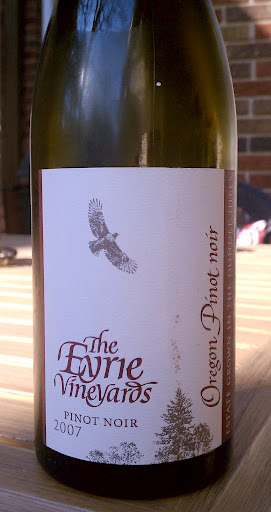
Despite the warnings and criticism, Lett took his “3,000 grape cuttings and a theory” up to Oregon. He rented a plot in a rye grass field outside Corvallis and planted the cuttings “nursery style” for safe keeping while he set off to find their future home. In 1966 David – by this time married to Diana – found what he was looking for: a 15-acre former date farm in the Dundee Hills region of Oregon’s Willamette Valley. David and Diana set about clearing the land and planting the vines. The farm was christened, with a bottle of Burgundy, “Eyrie Vineyards”, in honor of a family of Eyrie Hawks that still thrive in the Fir Trees surrounding the original vineyard plot.
 
The Eyrie Winery, built in nearby McMinnville in a converted turkey processing plant, was bonded in 1970. By 1975, almost unknown outside of Oregon, the Letts were quietly turning out world-class Pinot Noir. However, as these things go…the world was about to find out.    
 
It happened in a Paris suburb in 1979. It was called “Les Olympiads Gault/Milau du Vin”…The Gault/Milau Wine Olympics. The event was intended to showcase the international superiority of French Burgundy and was sponsored by Le Nouveau Guide of Gault/Milau, then a relatively new French magazine and restaurant guide that was attempting to challenge the “Guide Michelin.” There were 586 entries from 33 wine producing regions of the world, including some of the finest Burgundy ever made. In the final competitions of international Pinot Noir bottlings, with a panel of “Grand Connoisseurs” blind tasting blind, the unknown Eyrie Vineyards 1975 Reserve Pinot Noir shocked the house by placing third, ahead of many of Burgundy’s most prestigious wines. 
 
There was a good deal of consternation – and awe- about the number of foreign wines that had outscored the French at this “wine Olympics”. Six of these winners were challenged to a rematch, and Gault/Millau was invited to publish the results. 
 
The rematch took place in January of 1980 in Beaune. Twenty reputable French, English, and American wine judges assembled in the Hall of the Justice of Dukes of Burgundy. There were 12 wines total this time; six of Burgundy’s finest, and the six top non-French contenders from the 1979 wine Olympics. Once again, the Eyrie Vineyards wine gathered impressive scores…this time placing second only to the uber-expensive Maison Drouhin 1959 Chambolle-Musigny, and by only two-tenths of a point! 
 
Those results turned heads around the world, including that of Robert Drouhin, the winemaker at Maison Drouhin. Robert seemed to be more impressed that perturbed with these results, so much so that he sent his daughter, Veronique, to intern at the Eyrie Vineyards during the 1986 Harvest. In 1987, the Drouhin family purchased property in the Dundee Hills and planted over 200 acres of Pinot Noir and Chardonnay, becoming the first European family to invest in Oregon Wine. Domaine Drouhin Oregon released its first wines in 1991, and continues to produce high-quality wines year after year.
 
Oregon now boasts over 240 mostly family-run wineries, and is considered one of the finest areas on the globe to grow and make Pinot Noir, Chardonnay, Pinot Gris, and Sparkling Wines. Other prominent Oregon producers and pioneers include Dick and Nancy Ponzi, David and Sylvia Adelsheim, Chehalem Winery and Archery Summit. David Lett’s seminal role in the founding of Oregon’s Wine industry has been recognized by a nickname of affection and respect, “Papa Pinot”. 
 
Every year the Oregon wine industry hosts “The International Pinot Noir Celebration” on the campus of Linfield College. Tickets for the event sell out within days of their release. Top Pinot Noir producers from Burgundy, New Zealand, California and Oregon are invited to pour their delicious red wines to the delight of throngs of Pinot Noir lovers from all over the world. The culmination of the festival is a gourmet’s dream of a cookout, starring wild Oregon Salmon and Pinot Noir from Oregon’s Willamette Valley.    
 
It seems, after all, that Papa was right.
 

Time in a Bottle

Every time I start a new wine class, sometime during the first day or two, someone will ask, “Isn’t it true that older wine is better?” Or, “How long should I age wine before I drink it?” After a bit of debate on the subject, eventually, someone will ask, “What exactly happens to wine as it ages?”
 
I know this scenario well; it is exactly what has happened in every wine class I have ever taught. Trust my experience on this one: last night I tallied up the number of wine classes I have taught over the past 11 years as a full-time wine educator. As of today the number is 8,786.
 
With due respect to the fact that the aging of wine is a huge, debatable topic, I offer you in “almost real-time” and as close to verbatim as my fingers can type, the “Cliff-Notes Version” of my answers to the often-asked questions of time, as it relates to wine. 
 
Is older better?
Most wine on the market today is designed to be at its best immediately upon its release. Some statistics say that nearly 95% of the wine we see for sale today is just this type…best to consume it now, while it is young and fresh. Not surprisingly, this correlates rather well to another statistic: that 95% of the wine purchased today is consumed within one week of purchase. If you look at your own wine buying habits, it is likely that when shopping for wine, you are shopping for something to drink that day, that evening, or that weekend.
 
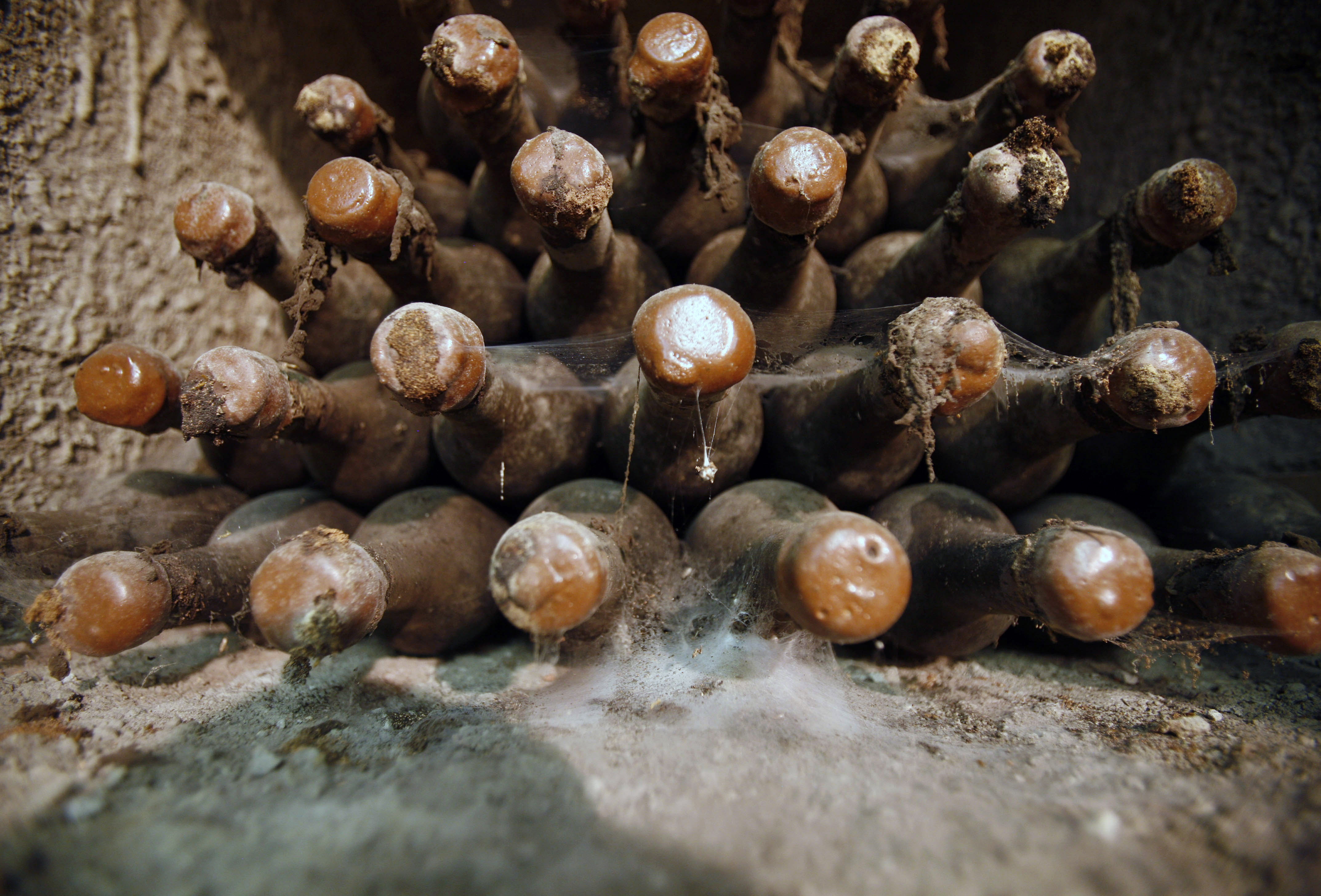
And yet it is true that there are those wines that benefit from proper bottle aging; able to change and become better over time. For white wines, the ultimate age might be five to ten years. For hearty red wines, noble dessert wines and vintage Champagnes, it might be a decade or even more. While popular culture is rife with tales of hundred-year-old bottles opened with pomp and circumstance at cloistered affairs, such bottles are rarely – if ever- in prime condition. It must be remembered that all wine will inevitably reach its peak and go “over the hill,” meaning the taste, flavor, and aroma will start to fade
 
What type of wine is age-worthy?
The type of wines that can support five, ten, or even more years of gentle aging are generally made from what the French refer to as “Noble Grapes”.  As a matter of fact, the archaic definition of “Noble Grape” was a grape that produced a wine that could be aged. I thoroughly expect – maybe even hope – to catch flak from wine experts near and far for what I am about to do, but here goes: I offer you a short list of some of the grapes considered “Noble”, now and forever. For red wines, you can count on the basic Bordeaux varieties of Cabernet Sauvignon and Merlot, Italian Superstars Sangiovese and Nebbiolo, and Spain’s Tempranillo, as well as Syrah, Pinot Noir, and many other lesser-known red grapes. Age-worthy whites include Chardonnay, Sauvignon Blanc, Semillon, and Riesling among the chosen few.
 
What exactly happens to wine as it ages?
As red wine ages, the harsh tannins of its youth gradually give way to a softer mouthfeel. An inky dark color will fade to a light brick red. In processes that began during fermentation and continue after bottling, certain compounds in the wine will begin to bind together and “aggregate.” Eventually these particles reach a certain size where they are too large to stay suspended in the solution and will sink to the bottom of the bottle and become visible sediment. The resulting wine, with a reduction of its tannins and pigment, will have a paler color, softer taste, and less astringency than the wine had in its youth. 
 
In a parallel process known as “esterification,” the wine’s acids combine with some of the wine’s alcohols in a complex array to form the chemicals known as “esters”, introducing a whole new range of possible aromas to the wine. These complex scents are known as “tertiary aromas”, or bottle bouquet…the amazing, multi-layered scent of a mature wine. These aromas might include floral aromas such as rose petal, lilac, or what I call “distant memories of honeysuckle and jasmine.” You may notice exotic spice aromas such as cardamom, star-anise, cinnamon, curry, or “Earl Grey Tea.” Earthy aromas such as truffle, wet leaves, mushroom, forest floor and cedar can emerge. 
 
How do I know if I should drink a wine now, or wait?
I am about to commit the sin of generalizing about wine…however, to answer the question it must be done.  Here goes:
 
If a bottle of wine costs less than $25.00, drink it now. 
 
If you like the way a wine tastes today, go buy some more and drink it now.
 
If your wine is made from the noble grapes, vineyard regions, vintages, and via winemaking techniques that support aging, consider laying it down. 
 
If your wine has high levels of sugar, alcohol, tannin, or acidity, consider laying it down.
 
If the winemaker told you the wine is age worthy, lay it down!
 
When in doubt, pour it out…into a glass and down your throat, that is! If you’re really not sure whether to open a bottle or not – open it up. Invite a few friends over and turn an ordinary day into a special occasion. The worst thing that can happen is you drink a great wine too young – and wouldn’t you rather drink it too young than never get to drink it at all?  

Street Cred

Day One Week One Wine ClassIf I just must, here it is:  My name is Jane A. Nickles and I have been a full-time wine educator/culinary educator/academic director for culinary colleges for over 15 years.  Previously, I was a food and beverage director and executive chef  for a large hotel chain.

I am/have/like to talk about my/am embarrassed by my:

M.B.A., California State University

B.A., University of California at Berkeley

Certified Spirits Educator (Society of Wine Educators)

Certified Wine Educator (Society of Wine Educators)

2012 Banfi Award Winner – Society of Wine Educators

2009 Winner – Professional Wine Writers Competition – WOSA (Wines of South Africa)

Currently the Director of Education for the Society of Wine Educators

14 Years Full-time Chef Instructor and Wine Educator at Le Cordon Bleu College – Austin

6 Years Food and Beverage Director (Bristol Hotels and Resorts)

Published Author (Textbooks, Journals, Web)

Educator of the Year – Career Education Corporation – 2007

Educator of the Year –  Career Education Corporation -2009

The “Ultimate Culinary Educator” – Food Educator’s Learning Conference – 2009

Number One Rated Conference Speaker – 35th Annual Conference of the Society of Wine Educators (Washington, DC)

Conference Sessions led, Classes given – literally too many to count!

Bored Yet?

It’s a living…

Breakfast of Champions...aka 9:30 am Class

Welcome to the Bubbly Professor…a new blog about the life of a wine educator.

Wine tastings, wine classes, and wine dinners are part of being a full-time wine educator, but it’s a package deal that includes grading finals, reading papers, and schlepping boxes as well.   It’s a glamorous job, for sure, if you only count the 5% of the day that includes the flashy fun.

As for me, I have the expected credentials (see  “street cred” ) and the experience:  I am a chef instructor and wine educator for an accredited culinary college in Texas, have taught wine classes full time for over 15 years, and in my former life served stints as executive chef, sommelier, and food and beverage director.  Known to friends, family, and students as “Miss Jane” of Austin, Texas.